
8 Strategy Concepts Every PM Should Know
Hey Ant here 👋 I write a newsletter that won't go viral - and that's the point.
Because hot takes, clickbait and AI slop won't help you ship better products. But practical content grounded in real work will - the kind I do every day on my own products and the product leaders I coach.
Join 15,000+ product people who subscribe. Same applies to my YouTube channel!
Recent posts you might have missed:
- The Most Demanding Role in Product
- Exploring vs Exploiting: The Two Modes of Product Discovery
- Prioritization Happens In Layers
FYI next live stream is on AI Design tools next week.
I’ll be putting Claude Design vs Figma Make vs Pencil vs Paper head-to-head to see which is best
I’ll also share the trends I'm seeing across my clients when it comes to product and design in the AI era – and anything else you want to throw at me live!
Register here for a calendar invite + recording.
Or join us over on YouTube.
Flywheels, network effects and several core concepts that every product manager should know.Having a flywheel is not a strategy.
Nor is product-led growth.
These concepts get referred to as product strategies but they’re concepts you apply in your strategy.
A Product Strategy is messy and ultimately a set of choices. One of your choices might be to have a specific flywheel but it’s important not to confuse that with product strategy, they’re different things.
Now this doesn’t mean they’re useless. On the contrary, I think of them as some of the most important concepts product leaders should know.
Strategy requires you to find points of leverage and therefore knowing these concepts are key to making smarter choices.
So I thought I’d cover 8 that I believe are worth knowing. I’m sure you are already familiar with most of them but I’d bet some are new.
1. Product Positioning
One thing I've noticed is that we focus far too much on physical differentiation and not enough on positioning.
However, products aren't inherently valuable. They're only valuable if they're perceived that way.
Which is where positioning comes in.
Positioning as a concept goes back to Al Ries and Jack Trout's 1981 classic Positioning: The Battle for Your Mind.
Their argument was that the real battle happens inside your customer's head.
My favourite example from the book is the car rental brand Avis. They stopped trying to beat Hertz for the top spot and instead doubled down on their position as second place and said; "We're No. 2. We try harder."
That was enough to flip 13 straight years of losses into a profit within twelve months. The same cars, the same business and locations, nothing changed other than how customers perceived them.
And this is what product positioning is all about.
Product positioning is the act of defining where your product fits in the market relative to its competitors as it is perceived by your customers.
It’s about making your product be perceived not only as the better option but the obvious one – the whole premise of April Dunford’s brilliant book Obviously Awesome a worthy read!
Here’s a real example of this in practice from a coaching session the other week.
A Product Manager in the Product Mentorship works at a media company and owns their audio product lines for the company — think podcasts and radio. She proposed this challenge to me the other day:
"How do I beat Spotify? I'm getting compared to them internally but we're never going to beat them, right? I'm not sure what to do."
I asked; “why try to beat them?”
“Why not change the game?”
Because she was right. They were never going to beat Spotify, that’s an impossible goal. So stop playing that game and start playing a new one.
We got deeper breaking down the things they were good at? The things that makes them different to Spotify, etc.
And this isn’t about listing out a set of features. It was helping her think about positioning – “how can you make yourself no longer be compared to Spotify?”
I won’t share the details of where we landed but to give a theoretical example; She could position as the best audio app for bedtime stories.
Can you listen to bedtime stories on Spotify, yes (I think so).
Can you listen to them on YouTube, yes (my son does).
And will some people still go to those platforms for bedtime stories? Yes, of course.
But when the majority of people are looking for a bedtime story app are they searching for Spotify? YouTube? No.
When they see that you’re positioned as the largest library of bedtime stories are they wondering how many bedtime stories are on Spotify? I bet not!
Instead they’re probably thinking “Wow a bedtime story app. That’s exactly what I’m looking for!”
And that's the point of product positioning.
No one buying a new car compares Ferrari to Toyota.
Even though they're both cars. They both get you from A to B.
And Toyota has the best ROI.
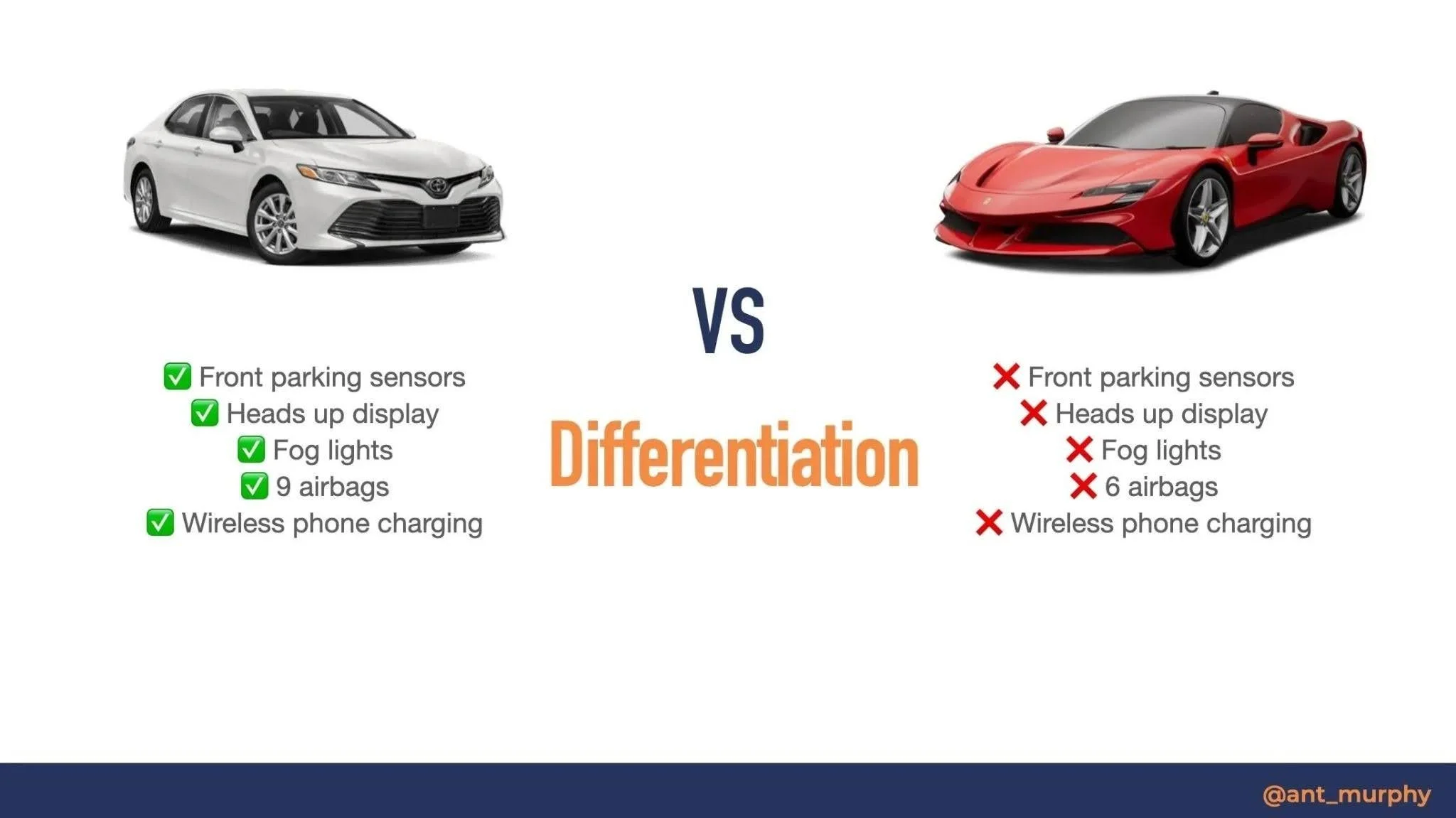
But we don’t even think about this as a fair comparison. It’s because they both occupy different parts of the market in our minds.
Toyota’s are perceived as a mass market, every day, reliable car.
Ferrari’s are exotic. Exclusive. Luxury.
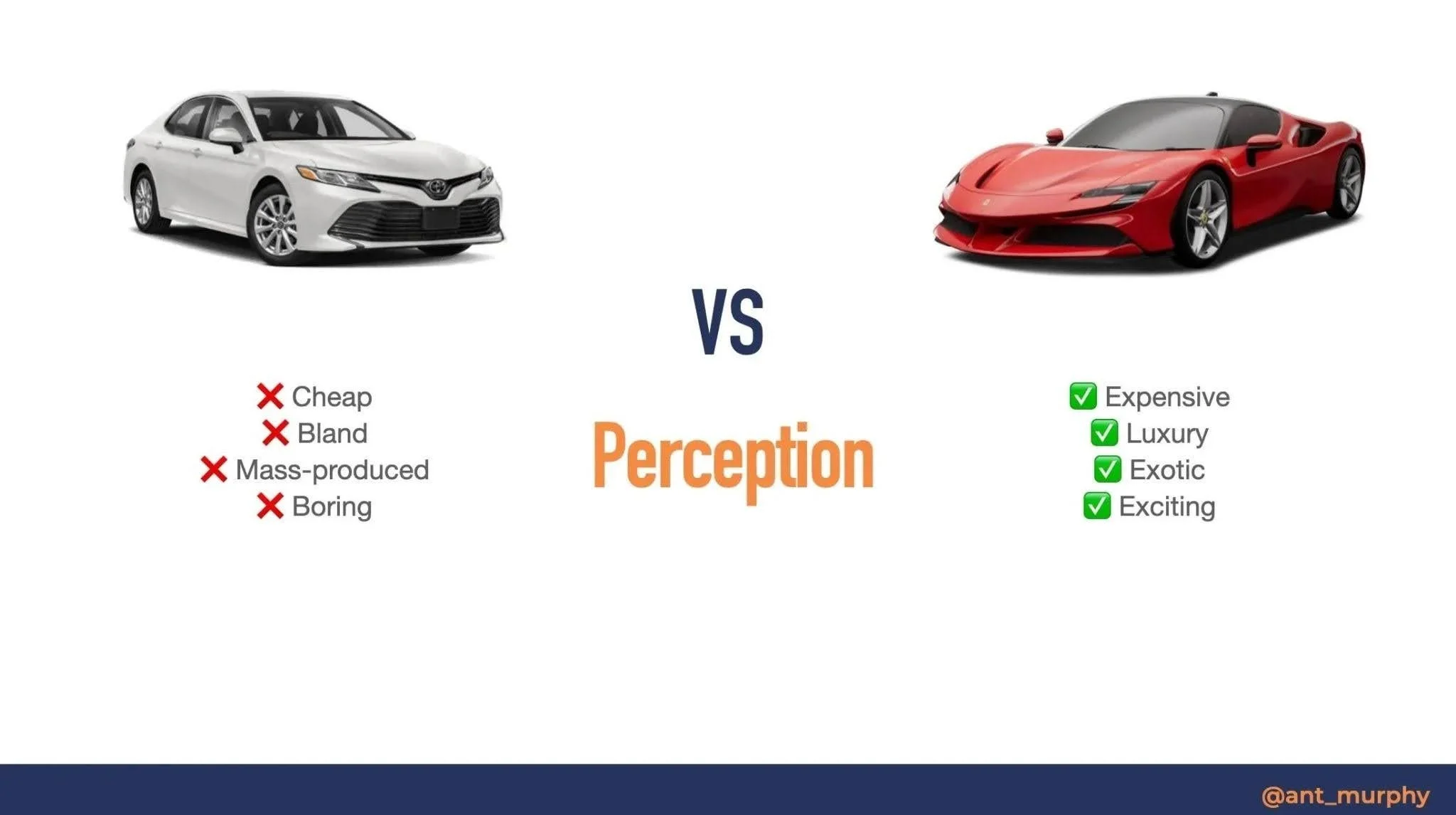
It's why Toyota created Lexus.
Toyota spent years building cars people raved about. Reliable, well-built and still praised for it today. But the Toyota badge had a ceiling. No matter how good the car was, they were never able to sit alongside premium brands.
And this was a great example of positioning at play. No one looking to buy a BMW or Mercedes was cross-shopping with Toyota.
And Toyota realised this. Their research backed it up; the Toyota name would be a disadvantage in the luxury market. And because dragging an established brand upmarket is one of the hardest moves in positioning — not impossible, but brutally slow — they didn't try. Instead in 1989 they launched a new brand called Lexus.
And this is a hard lesson to learn.
Your product isn’t inherently valuable. It’s all about how it’s perceived.
Perceptual Mapping
To make this practical there’s a great tool known as Perceptual Mapping that can help you think about your product’s positioning.
You can read my post or watch this video I did on perceptual mapping to learn more. It’s a technique that I use regularly - even created one the other week for a client (and a great tool to throw at AI to help you pull it together).
2. Flywheels
Jim Collins coined the term flywheel in his book Good to Great.
A flywheel is a self-reinforcing loop where each turn makes the next turn easier.
In his' follow-up, Turning the Flywheel Collins used Amazon as a well known example:
Lower prices → more customers → more third-party sellers → more selection → better experience → more customers → lower costs per unit → even lower prices. Round and round.
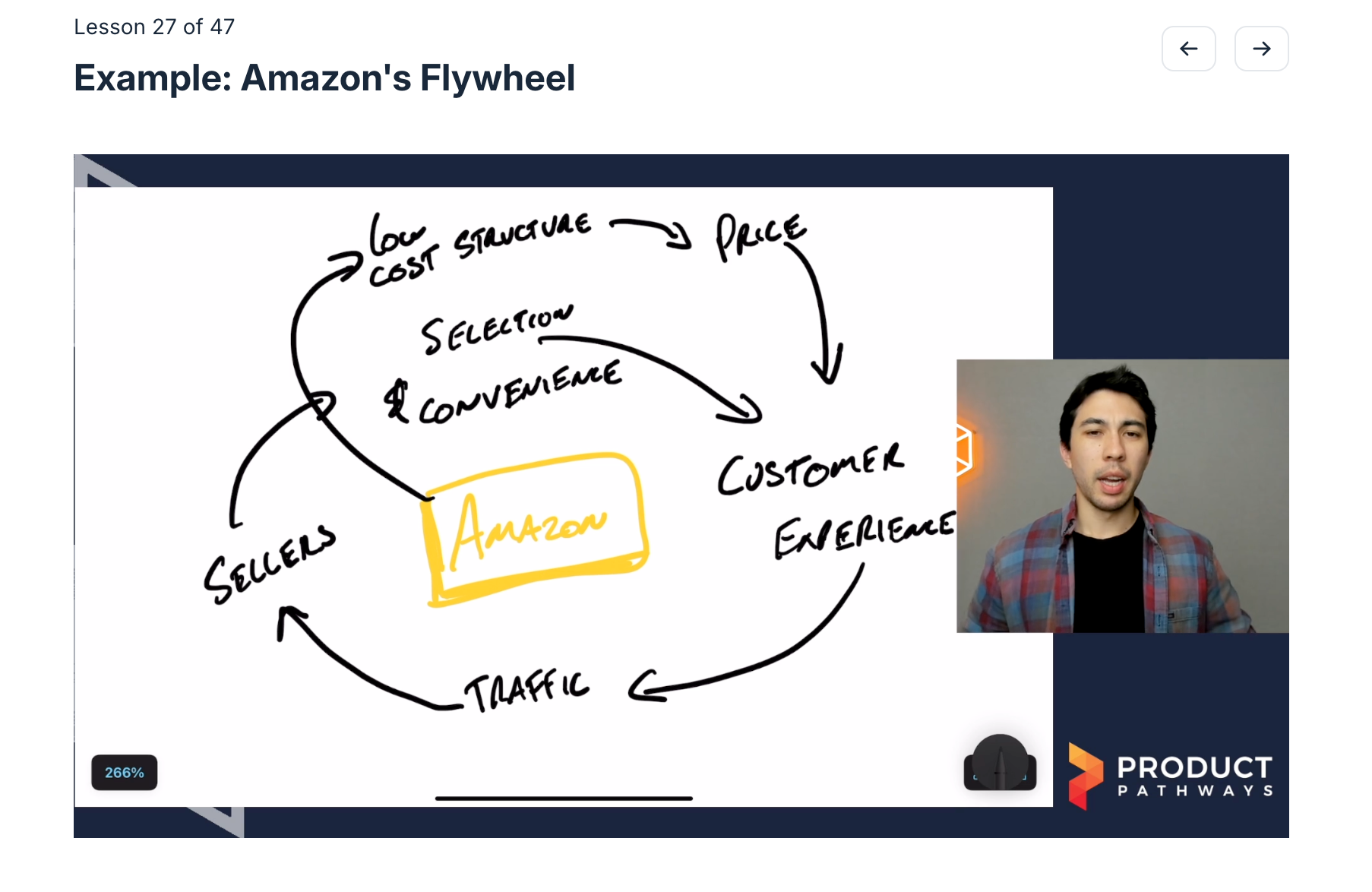
Amazon Flywheel covered in the Product Strategy Demystified course on Product Pathways.
But whilst Amazon’s one gets quoted a lot, the flywheel I love the most is YouTube’s:
Revenue shared with creators → more money → better videos → more views → more ad revenue → more money to creators → hire staff, go full time → EVEN BETTER videos → repeat.
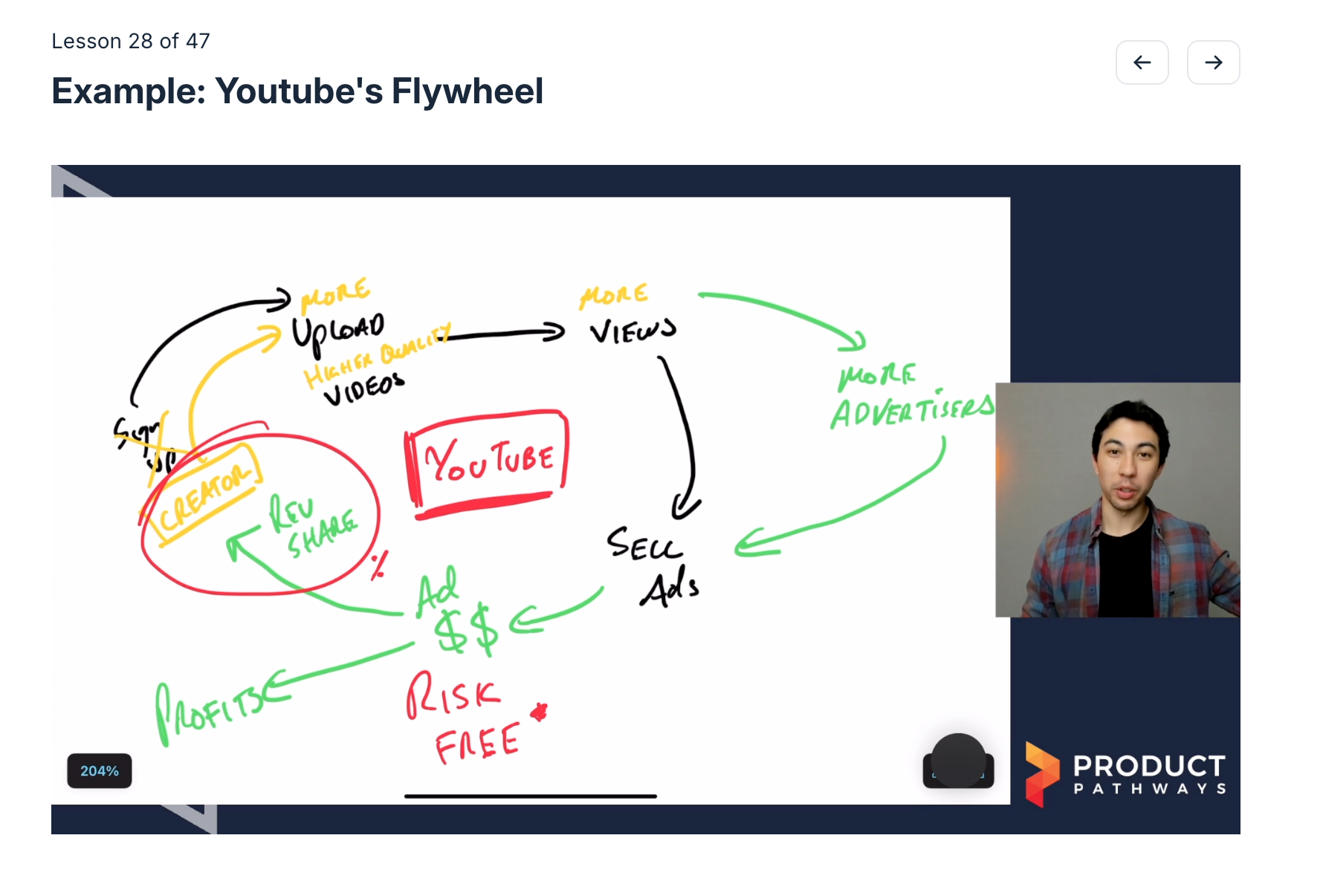
Youtube's Flywheel covered in the Product Strategy Demystified course on Product Pathways.
What makes a flywheel different is that each step feeds the next and forms a self-reinforcing loop.
Flywheels are also generally very powerful because they can be spun by applying pressure to one spot in the loop.
For Amazon, it was 'more selection', and for YouTube it was their support to creators through revenue sharing.
Which is why they’re so high-leverage. You get a lot out by putting very little in.
3. Network effects
A network effect is where your product becomes more valuable as more people join and use it.
WhatsApp, Facebook, Instagram, etc are all famous examples of network effects.
Every new user who joins these platforms makes the product more valuable. There’s more content, more connections, more people you can message, etc.
Whilst network effects are the most famous for consumer apps, you can apply network effects to other aspects:
Visa: more merchants who accept it = the more valuable it is to use
Tesla Superchargers: more chargers = more useful the car
A network effect is not the same as a flywheel. They may seem similar but they’re different.
A flywheel is a closed loop. Each step makes the next step easier. A network effect is about increasing value by adding more users or nodes (superchargers) to the network. This doesn’t necessarily fuel growth like a flywheel but it often does as more value attracts more users.
Here’s how I think about the difference:
"Does my product get more valuable as more people use it?" = Network effect.
"Does each step make the next step of a closed loop easier?" = flywheel.
And it’s not an either-or. You can have both, which is often why they look the same.
Amazon and Youtube had both a flywheel and network effect.
More videos on YouTube makes it more valuable = Network effect.
More videos → more users → more ad revenue → more revenue share with creators → more and better videos → and repeat = Flywheel
4. Switching costs
Switching costs become a lever when the cost of switching to a competitor outweighs the cost of staying.
Apple's ecosystem is the textbook case where every additional device, every password in Keychain, every card in your wallet, purchase from the App Store raises the cost of leaving.
My wife recently made the switch back to Android and despite the effort to get everything migrated across we ran into small ‘switching costs’ such as how her AirPods no longer automatically go to sleep when you’re not using them (they will stay connected now and drain the battery more) or the fact that she can’t manage our son’s iPad anymore (we didn’t think about that one!).
Switching costs can take many different forms:
Financial: repurchasing hardware, early-termination fees, re-licensing.
Effort: data migration, retraining your team, rebuilding integrations and workflows.
Psychological: loyalty points you'd forfeit, status tiers you'd lose, the identity of being a "power user".
This all works because it leverages human biases such as sunk cost and loss aversion.
A word of caution however; switching costs is one of those levers that can be misused.
You don’t want to create resentment through switching costs. Customers should never become hostages. An example of this is having things like ‘exit fees’ or other gates that you’ve added to artificially introduce a switching cost (like not being able to export your data or something).
These might help you keep customers but you’ll burn bridges doing so.
The revenue gained in keeping them is often outweighed by the fact they’re going to complain and tell everyone they know to not fall for the same trap they did.
Instead the right way to implement switching costs is to build your product in a way that it organically gets more personalised, more embedded, more valuable over time.
FYI I cover all of these levers in depth in the Product Strategy Demystified courseand how to apply them to your product strategy.
5. Economies of scale
This one is quite self-explanatory. Economics of scale are where your per-unit costs fall as you grow. Eventually getting to a point where few can match your prices and survive.
Amazon again leverages economics of scale (you'll notice some companies leverage several of these. More on that later).
Having fulfilment centres spread across countries and their enormous size means they have a scale that few can match.
Costco and Walmart do the same. They have buying power that lets them sell at margins competitors can't sustain.
And whilst this is more of a physical product play you can still apply economies of scale to software.
Netflix does this. There’s no way Netflix can charge $20 per month and be able to spend $20 billion in cash per year producing original content without their global scale.
Another form of economies of scale are product-led growth (PLG). Whilst this varies between industries and products, most PLG SaaS products run ~90% free users and 10% paid. Which again means this can only sustain through a certain scale.
This is why many SaaS startups raise capital to aggressively pursue user acquisition. Because the economics only work when you hit a certain scale.
6. Intangible assets
Intangible assets might sound like an odd term but it’s a catchall for anything that isn’t tangible that gives you leverage over your competitors: patents, trademarks, proprietary technology, regulatory licences, data, and brand.
Brand is perhaps the most powerful in that list and could deserve its own spot in the list.
For example, my wife’s new Oppo Find N6 is objectively better than my iPhone in a lot of ways, yet people will queue up overnight to get the latest iPhone.

And that’s because features don’t matter as we covered at the start.
When it comes to Ferrari people aren't buying the car, they're buying the badge.
And I get it "build a brand" sounds like marketing's job or reserved for the Apple’s and Ferrari’s of the world but every interaction your product has with a customer is creating some kind of brand.
In Australia, we just had our two major telco’s have severe outages over the last 12 months. The most recent one turned out to be an old server. So obtaining that security certification, fixing tech debt, cycling production keys and the decade of zero data breaches is something that shouldn’t be overlooked.
Product teams are custodians of an intangible asset whether they acknowledge it or not.
So don’t overlook this one!
7. Counter-positioning
This one's my favourite, and it's the best concept I got from reading Hamilton Helmer’s 7 Powers.
Counter-positioning is adopting a business model your incumbent competitor can't copy without damaging their existing business.
Not won't. Can't!
(At least not without self-cannibalising.)
Netflix vs Blockbuster is the definitive case. In 2000, Blockbuster had stores all over the world and Netflix had none. For Blockbuster to copy their business model, they would have had to cannibalise their existing stores.
Furthermore, that year Blockbuster collected nearly $800 million in late fees, about 16% of its revenue. Netflix's subscription model had no late fees at all. Which meant Blockbuster had to decide whether they copy them and torch $800 million of pure-margin revenue.
These are golden handcuffs for incumbents and a core reason why it's so hard to combat counter-positioning.
A profitable business with a big customer base, high costs and thousands of employees is hard to change. Pivoting would mean losing customers (and revenue) in the short-term as they rewire how the company operates. That’s a hard sell to shareholders — and I know because I'm having these conversations with some of my clients' boards and C-suites at the moment about AI!
Kodak also ironically fell for this being both the victims and creators of digital cameras.
One of their own engineers, Steve Sasson, built the first digital camera in 1975. When he showed it to management, he was told they could sell it but won’t. Simply because it would eat into their film sales.
Clayton Christensen coined this the innovator's dilemma:
"The very decision-making and resource-allocation processes that are key to the success of established companies are the very processes that reject disruptive technologies." (I go deeper on this in ‘The AI Chasm’.)
Counter-positioning and the innovator's dilemma are two sides of the same coin. Which is why you tend to see a surge in counter-positioning plays any time there is a new technological shift.
And we're living another one of these moments right now with AI.
For Netflix vs Blockbuster, it was the dotcom boom with the rise of personal computers and the internet.
Blockbuster was a business built on the pre-internet world. Netflix could counter-position itself by building a business model around the new world. The internet.
Just like every incumbent in the early 2000s had been built for a pre-internet world, today every business is built around a pre-AI world.
Pre-AI world = humans + computers.
Post-AI world = humans + AI agents + computers.
And this is a big part of why there's so much hype around AI right now.
It's a paradigm shift opening countless counter-positioning windows across almost every industry.
Take Jira for example, it’s an issue tracking tool for people. Because people wrote software.
But today we now have agents coding. This means you need something else.
Which is the bet that Linear is making.
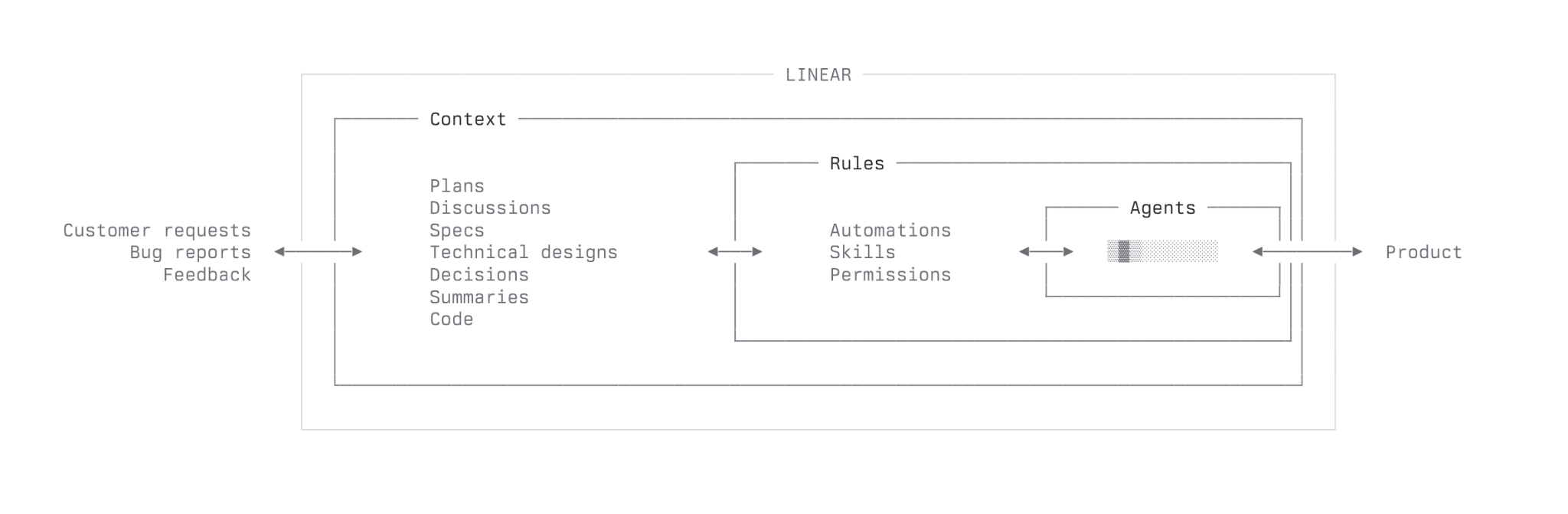
And you can see Jira responding with their launch of agents in Jira.
Time will tell if Atlassian and other companies that have benefited from the nearly three decades of the internet will be able to adapt to AI or become the next lot of famous Blockbuster and Kodak stories that we’ll be telling the next generation in 10 years from now.
8. Niching down + adjacent growth
The last one is a two-part move that I’ve combined together because they’re not mutually exclusive.
The first is Niching down.
When starting out you want to look for opportunities that are underserved and likely a ‘rounding error’ to the current major incumbents.
For example; Amazon didn't launch as "the everything store", they launched as an online bookstore. Lululemon didn't launch as an activewear giant, they started with yoga leggings for women.
But that’s never the endstate. The goal is usually something bigger but making leaps towards it is often how companies fail whilst growing – they scale too fast.
Which is where the second element comes in: Expanding through adjacent moves.
Once you dominate the niche, you need to make intentional steps into neighbouring markets.
Books → CDs → electronics → everything.
Yoga leggings → men's yoga → running → everyday clothes.
Chris Zook's codified this into the 1-degree of separation rule in Beyond the Core: the best adjacent moves are no more than one degree of separation from your core.
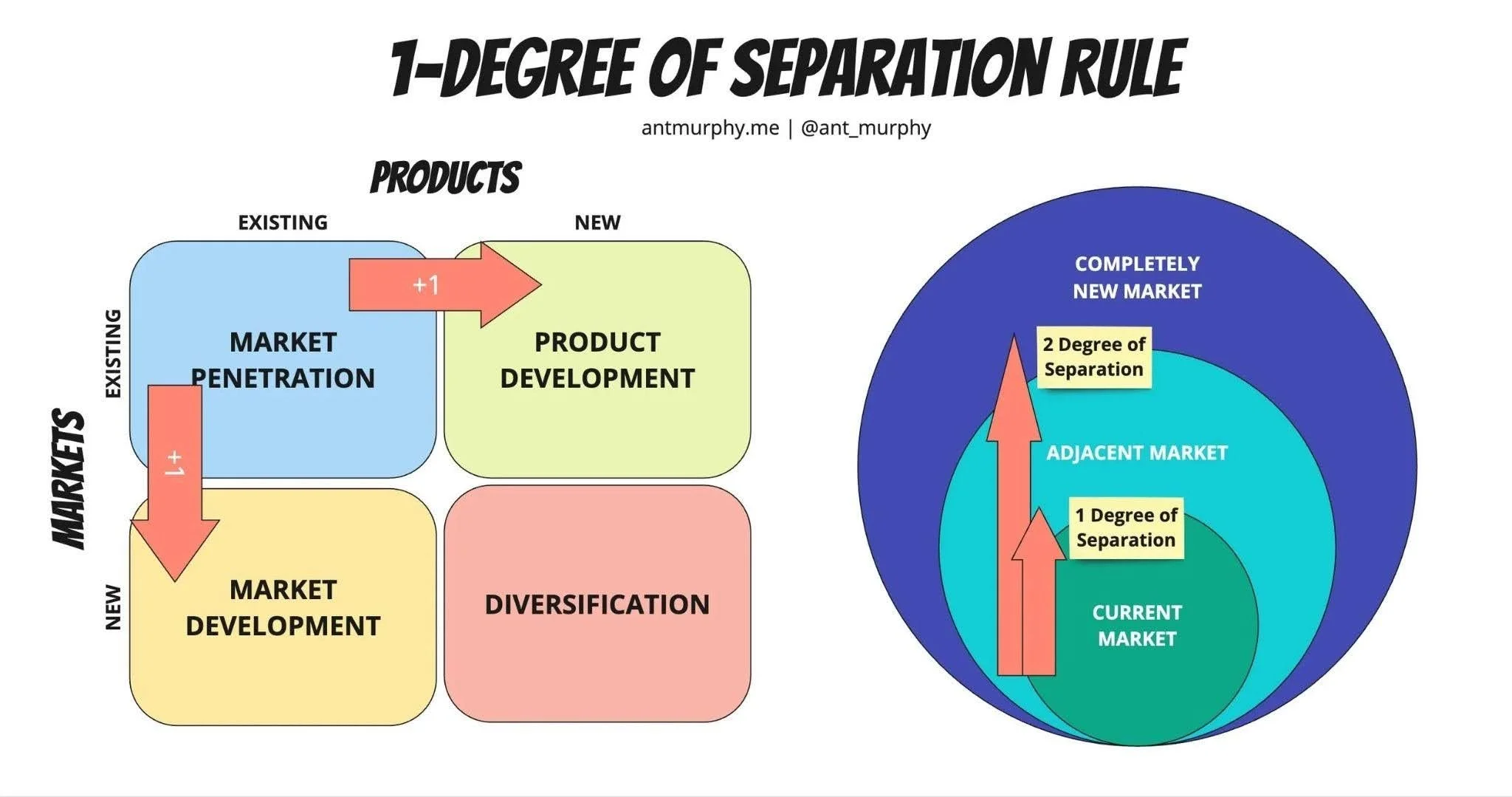
Meaning that you should only ever expand an existing product into a new market or expand by offering a new product to your existing market – but don’t try to do both at the same time.
I cover all this in depth in my post on the ‘Adjacency Growth Strategy’ if you’re interested in diving deeper.
The real lever: combining them
You might have already noticed that many companies don’t just use one of these levers. They combine several of them at once.
This is another reason why I wrote this post as a list. The advantage comes from applying them together.
Amazon: economies of scale + flywheel + niching-then-adjacency + switching costs (Prime)
Apple: switching costs + intangible assets (brand) + network effects (App Store)
Netflix: counter-positioning to enter, then economies of scale to defend + intangible assets (Netflix only content)
PLG (Product-led Growth)
A good example is where does product-led growth fit?
I get asked this every time I share this list as I intentionally didn’t add PLG as #9 and that’s because PLG isn't a first principle concept, it’s the combination of several.
It’s:
A Flywheel: great experience → users invite others → more users → better experience
A Network effect: Figma gets more useful with every collaborator you add to the file. Snapchat gets more valuable the more people who join and share content.
Switching costs: Being able to use a product for free means users accumulate switching costs the more they use it. Before they know it, it’s easier to upgrade than to find an alternative.
Economies of scale: I mentioned before that offering a free tier to 90% of your users is only possible if you have scale.
That's four of the eight, stacked into one single motion and probably why PLG works so well!
Of course, there's nuance
Two caveats before you go implementing some of these.
You don't need any of these to be successful. Plenty of successful businesses run on excellent execution in a market without leveraging any of these concepts. They help and can create leverage for you but they’re not mandatory for product success. Only use these if it makes sense for you.
Levers decay. Blockbuster had scale and brand right up until the world shifted and patents expire, brands tarnish and networks lose their steam. So just because something has worked in the past doesn’t mean it’ll continue to work in the future.
Hamilton Helmer also made this great point in his book 7 Powers:
A ‘Power’ has a when, not just a what. Some of these levers can only be established during specific windows in a product's life. Which means this isn't a set-and-forget exercise; it's a lens you revisit every time the market moves.
I hope this was helpful and it gave you some exposure to some new concepts.
If you’re working through your product strategy, I’d recommend testing some of these concepts out in step 3 of my 4 steps to building a product strategy.
If you have any questions or want to go deeper into any of these specifically, hit reply and let me know.
I think I’ll do a deep dive into the counter-positioning one, just because it’s so relevant right now and I’m having these conversations with CPOs, CEOs and boards right now — watch this space!
Thanks as always for reading!
Appreciate the support 🙏
/Ant
p.s. Don’t forget next week’s live stream if you’re interested in the state of AI Design Tools and where product and design might be headed.
Register here for a calendar invite + recording: https://streamyard.com/watch/WncAJWXK8hrG
Or join us over on YouTube: https://www.youtube.com/watch?v=2KVgE2gx8vY

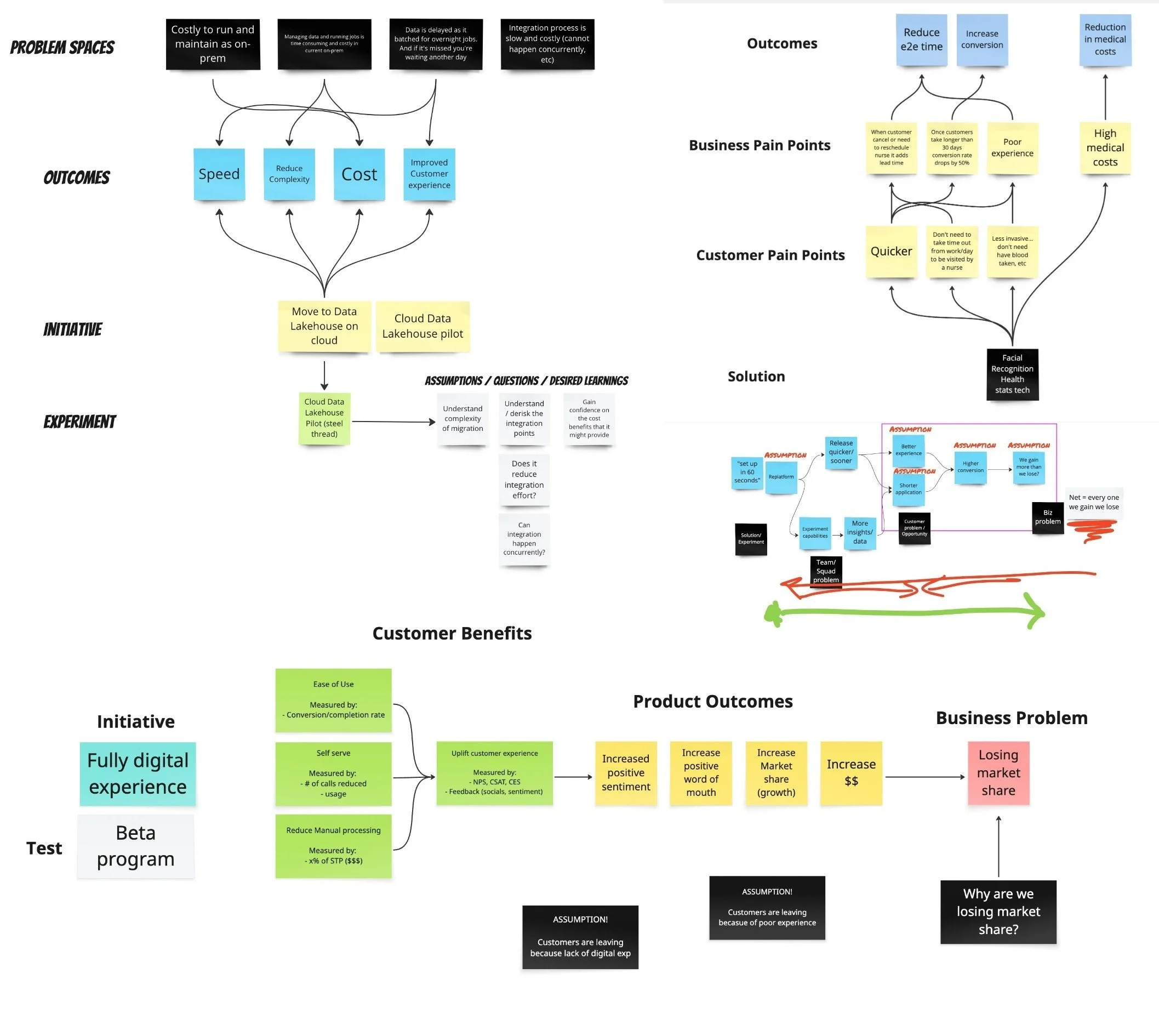







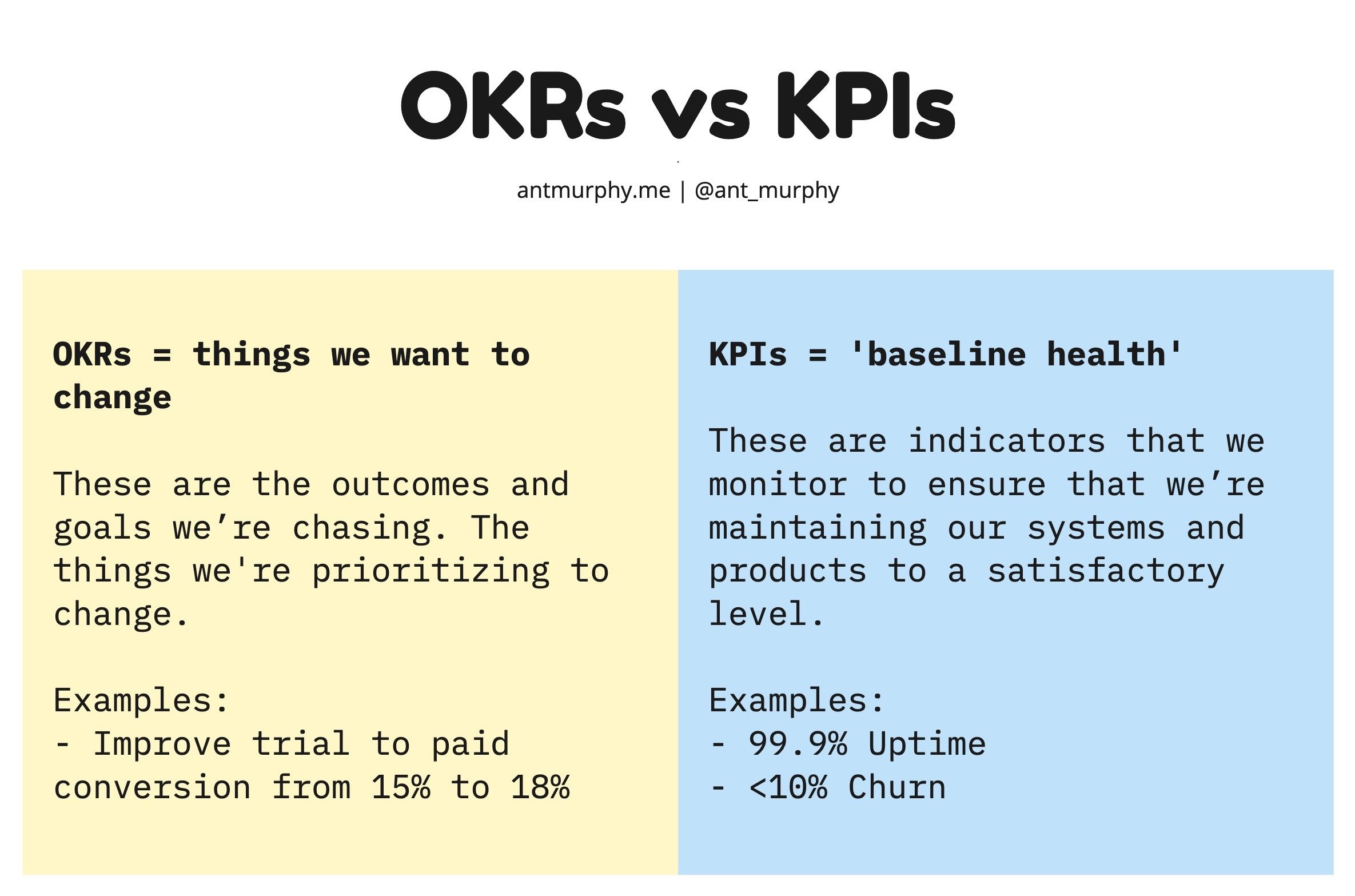

Your OKRs don’t live in a vacuum.
Yet this is exactly how I see many organizations treat their OKRs.
They jump on the bandwagon and create OKRs void of any context.
Here’s what I see all the time…