
Nobody’s Actually Prioritising ‘Value’
Hey Ant here 👋 I write a newsletter that won't go viral - and that's the point.
Because hot takes, clickbait and AI slop won't help you ship better products. But practical content grounded in real work will - the kind I do every day on my own products and the product leaders I coach.
Join 15,000+ product people who subscribe. Same applies to my YouTube channel!
Recent posts you might have missed:
- The Most Demanding Role in Product
- Exploring vs Exploiting: The Two Modes of Product Discovery
- Prioritization Happens In Layers
For those interested:
Next live stream will be on ‘How the Leading AI Companies Do Product’ (a hype free look at what’s the AI companies are saying vs what’s happening on the ground)
Upcoming AI workshops: I wasn’t planning on doing any workshops on AI but ask and you shall receive! Over the next two months I’ll be covering everything from getting set up to AI for discovery, strategy and more - find out more.
This post will change how you think about prioritisation and value. Warning includes several contrarian takes!One of the worst pieces of advice I got early in my product career was to "prioritise based on value."
Which isn't wrong, per se. It's just not helpful.
Because what do we mean by value?
User value?
Business value?
Customer value?
Cost of delay, opportunity cost, urgency?
What about tech debt, foundational work?
Jeff Gothelf wrote an article a few years back titled "Defining value: the most ambiguous word in product development" and he's spot on.
I've said before that if there were a battle for the most ambiguous term in product, ‘value’ would be runner up to 'MVP’.
Value is contextual. It needs to be defined. And most PMs who have been told to "prioritise by value" have never been taught how to identify and define value - this includes me!
Let me show you what I mean. Fair warning, this gets into some advanced product thinking that might challenge how you approach product today.
Nothing is inherently valuable
Let's get controversial right away and debunk value. Bad news but nothing is inherently valuable.
The same feature or customer opportunity, can be very valuable to one company and worthless for another.
Here’s an example I’ve used before:
If your strategy is to be the most trusted platform in your market, then work that makes you more trustworthy might be the most 'valuable' thing you can do. Even if doing so costs you more money and you lose revenue in the short term.
For another company, they might care less about trust (I’m sure you can think of a few that fall into this category). For them, opportunities around trust aren’t valued as high. They would be more likely to pick something else.
The consequence is that the same opportunity or feature can be viewed very differently.
And this is where frameworks like value over effort fall apart - value according to what?
Without answering that question, you’re assuming value is inherent. The opportunity or feature already has a set value and you’re trying to compare them.
But it’s not. It’s contextual.
Value exchange
This also means - wait for it… a customer problem isn’t inherently valuable either.
So it’s not enough to say, “solve customer problems” which has become a bit of a product industry mantra.
Much like the opening statement “prioritise based on value”, “solving customer problems” isn’t wrong per se. It’s just trite and too ambiguous to actually be meaningful.
So what is value then?
Value in product is an exchange between a company and its customers.
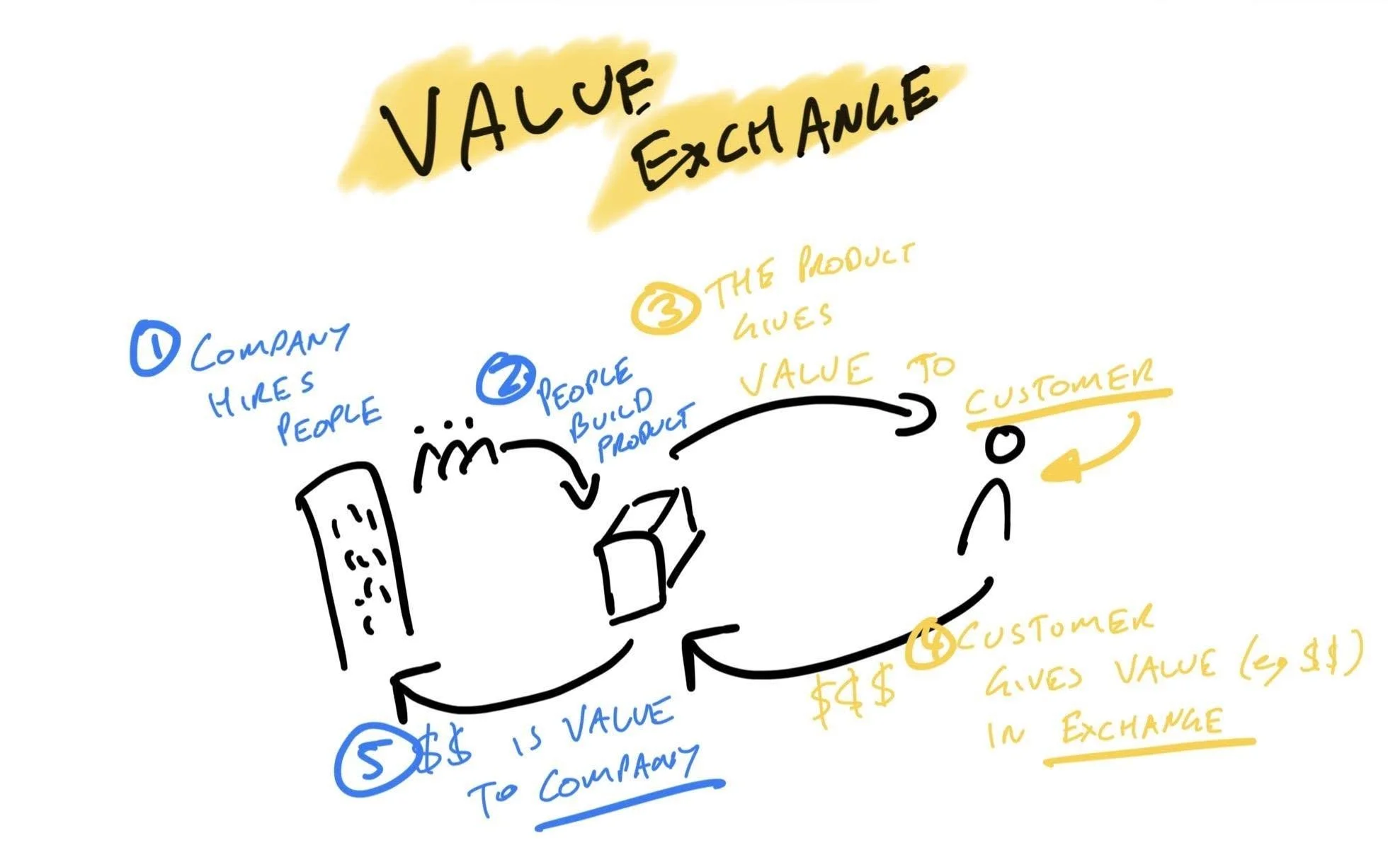
This is a first principle of product and a concept worth studying.
A product is a value-exchange vehicle:
You create value for the customer; they exchange something back (typically money, time, attention, loyalty, data) and that trade is worth enough to the company to continue offering the product or service.
This means that something is only valuable if it satisfies both sides of the exchange:
what your customers care about
and what you care about as a business
The problem with solving customer problems or business value is that they’re only one side of that equation.
Teresa Torres puts it perfectly:
"A product team's job is to create value for the customer in a way that creates value for the business. This is rarely done by fixating on a ranked idea list."
Your customers have thousands of problems, not all of them are worth solving.
Here’s two real examples from back when I worked at ustwo.
A problem space we looked into for a client was how not all petrol stations (sorry gas stations for my American readers) are suitable for trucks.
Either they’re too tall and this happens…
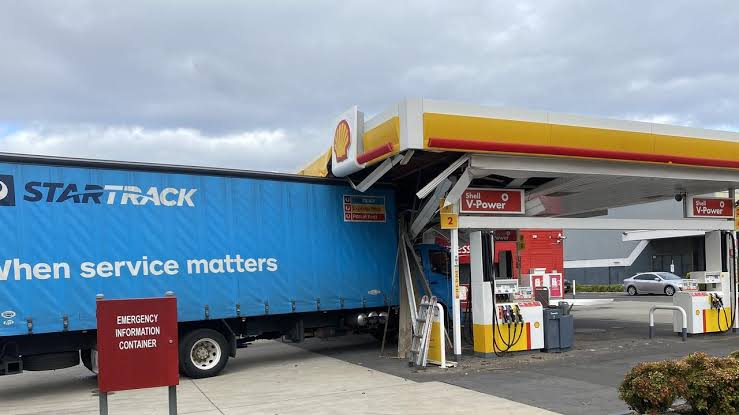
Or they can’t physically turn in and out.
Or lacked amenities that long haul truck drivers want (restrooms, high flow diesel, quality food, etc).
This was a clear problem space but as we dived deeper into it we realised that whilst this was clearly a problem, it wasn’t big enough to solve. In other words the exchange to the business wasn’t there.
This was for a few reasons, but mostly it was because of frequency.
Long haul drivers typically drive the same route over and over again, so they know which service stations to stop at and which to avoid. It’s only in exceptional circumstances that they need to deviate.
So we would essentially be doing all this work to solve a problem that occurs once every couple of months.
Another example was a large commerce company we worked with, who had consistent feedback from customers that shopping for a gift was difficult - I’m sure you’ve been there.
The reason why we decided it wasn’t a problem worth solving was because of complexity.
Everyone has their own personal preferences which makes gift recommendations hard. Common options are met with “my dad wouldn’t like that” or “that’s not their style”. And this was pre-generative ai so it was even harder to create a matrix of preferences to tailor recommendations.
And a solution that was anything short of meaningful recommendations (eg giving general options) just wasn’t something people were willing to pay for. Hence no value-exchange.
How to define value
So if value is contextual, who sets the context?
You do! Through your vision and strategy.
Value is defined by determining what is meaningful to you.
This is done through:
Product Vision: the world you’re trying to create.
Product Strategy: the coherent choices you’re making to realise that vision.
Outcomes: your strategic choices modeled as measurable outcomes.
This means value definition starts at the top and works down.
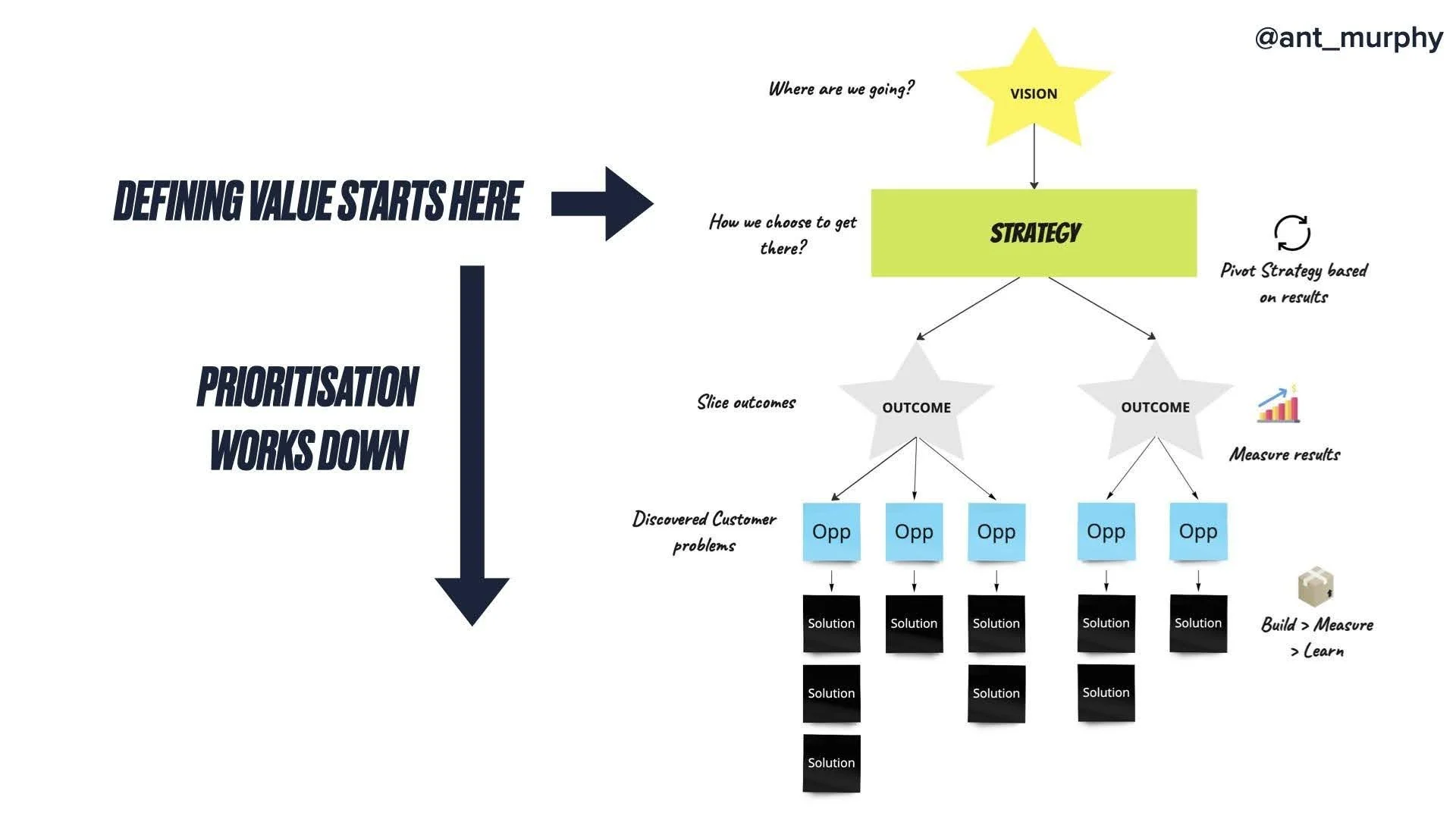
Once you have this defined value stops being ambiguous.
It becomes:
Which solution solves the chosen customer opportunity best?
Which customer opportunity will drive the most impact towards your chosen outcomes?
Which outcome is going to make us progress towards our strategy and vision the most?
And if it doesn’t fit into the chain then it’s not valuable to you. Not because it’s necessarily a bad idea, it's just not a valuable idea to you, right now.
This is why most of the time when companies struggle with prioritisation it’s not a prioritisation problem, it’s a strategy problem.
Without this definition all you’re left with is a long list of good ideas and no way to prioritise them. Prioritisation then descends into a corporate version of the Hunger Games where the loudest voice or HIPPO (highest paid person) wins.
You don't actually prioritise on value
Now the part where I’ll probably lose some of you.
You can’t actually prioritise based on value.
Because value only exists once there’s value exchange. That can only happen after you deliver the feature or solve the customer problem.
Until then it’s at best an educated guess about value.
And this is another reason why trying to prioritise based on value gets tricky.
I’m sure you’ve been in arguments about value where one person believes something will deliver $x millions but you’re skeptical. You think it’s far less valuable - or the other way around.
And that’s because what you’re actually arguing over is opinions about value, not actual value.
You don’t truly know - we’re assuming there’s value. And this is why discovery is so important.
Because the most expensive way to find out if an idea is good or not is to build it!
And if you’ve been in product for long enough you would have your fair share of ideas that you thought would move the dial but didn’t.
So what you’re really doing is placing a bet.
Annie Duke hammers this home in her brilliant book Thinking in Bets:
“What makes a decision great is not that it has a great outcome. A great decision is the result of a good process, and that process must include an attempt to accurately represent our own state of knowledge.”
Duke defines a ‘bet’ as a decision about an uncertain future. The core thesis is that every decision is a wager on an uncertain future made with imperfect information. Her conclusion (and what I experienced in the military also) puts the emphasis on judging the process, not the result.
Which is very backwards to the dominate thinking in product. We judge outcomes first, even if the PM got lucky.
If you subscribe to this fundamental principle then the focus needs to be on quality of decision making, not quality of outcome.
Which means shifting away from trying to get ‘value’ right (outcome) and focusing on the process that gives you confidence about that outcome (decision quality).
“Improving decision quality is about increasing our chances of good outcomes, not guaranteeing them.” - Annie Duke
Prioritisation is actually about confidence
Following this chain means accepting that your prioritised backlog isn't a ranked list of value. It's a stack of bets, each carrying a hypothesis: we believe doing X will move outcome Y.
Which means the real question you're answering when you prioritise - isn't "what's most valuable?" - it's:
Which of these opportunities will move the dial on our chosen outcome the most? and how confident are we about that?
All you have until you’ve delivered something is a hypothesis. It’s the bet that doing X will produce Y outcome.
Which means that the real activity of prioritisation is interrogating your confidence in those hypotheses:
How confident are we that this is a real problem worth solving?
How confident are we that solving it will move our chosen outcome — not just make customers happy?
How confident are we in this particular solution?
What evidence do we actually have — and how much of it is data versus opinion?
I wrote about this back in 2020 in Prioritisation is about Confidence, not Value, and the post still holds up.
If you shift the conversation away from value and towards confidence you feel the difference immediately. Where "should we build Feature X?" invites horse-trading. "How confident are we that Feature X moves retention?" invites evidence.
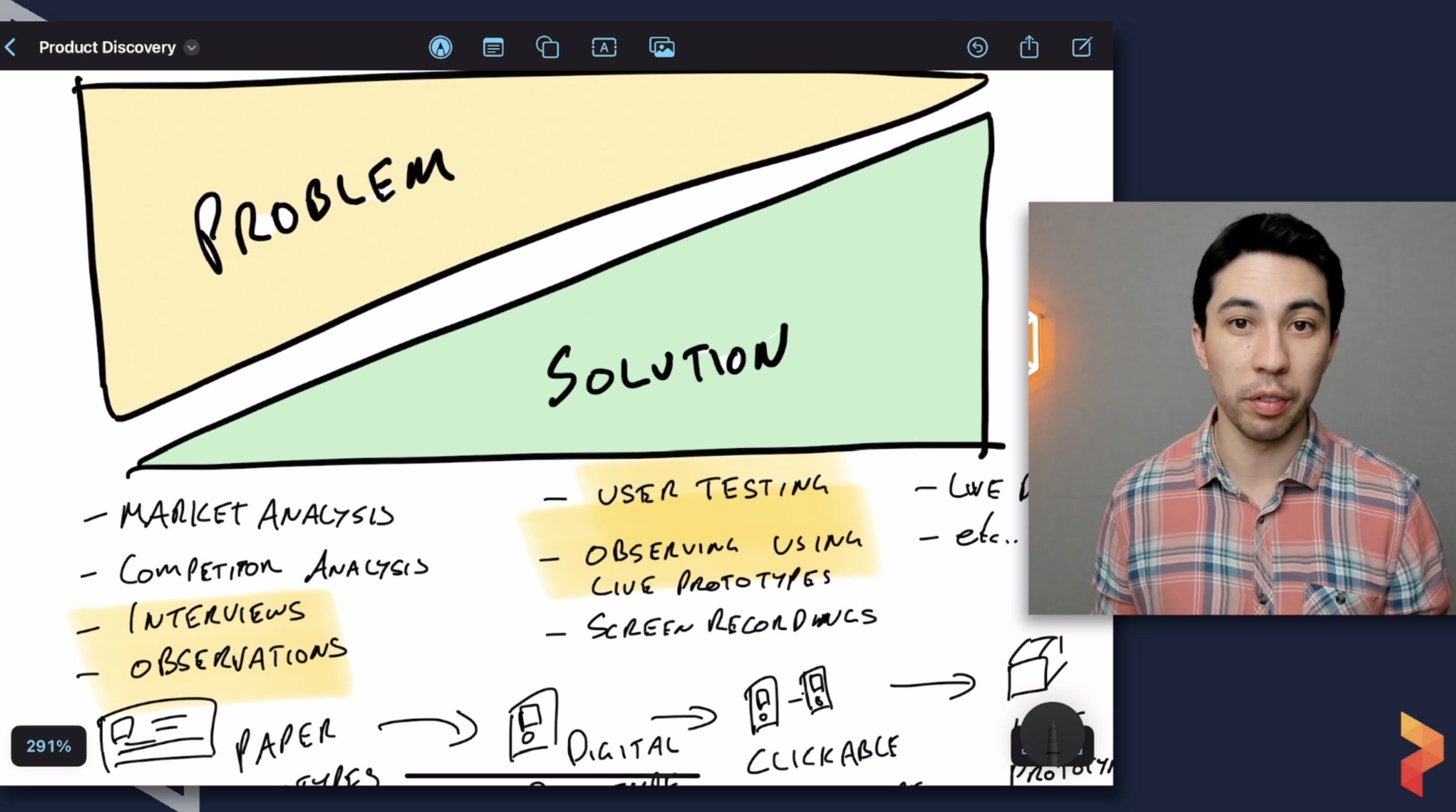
And this is exactly what discovery is for. Product discovery is a confidence-building process. You're gathering data to raise (or destroy) your confidence.
Putting your focus there is how you improve decision quality. Are you stopping bets that you have low confidence in? Are you pivoting? Using evidence to support decision making? etc.
Where to start
If this resonates, it’s worth watching the recording of my last live stream. I go into a few techniques I use here like KPI trees to break down your outcomes and define what is valuable to you.
The other things I would do is ask myself:
Do I have a clear product strategy? Or at the very least can I name the outcome that I’m currently chasing?
Can I frame my current top priorities as hypotheses? How confident am I that this is the right bet to make? Do I have evidence to back it?
And depending on what you feel is missing:
If it’s Product Strategy, I’d start here and I’d also grab these free examples.
If it’s discovery, start here.
And if it’s deeper than any of those and would like to work together on this, join the Product Mentorship.
It’s a great time to join. I will be running a series of AI workshops which are included along with both the Product Discovery and Product Strategy courses too.
No pressure though. My goal is that this post is enough.
So I hope it makes a meaningful shift in how you approach product management. And that prioritisation stops being a fight about opinions and becomes a conversation about evidence.
As usual thanks for reading
If this challenged how you think about value, good! That was the point — forward this to someone who would also appreciate having their thinking challenged!
Any questions (or disagreements. I welcome them) hit reply, it comes straight to me.
/Ant
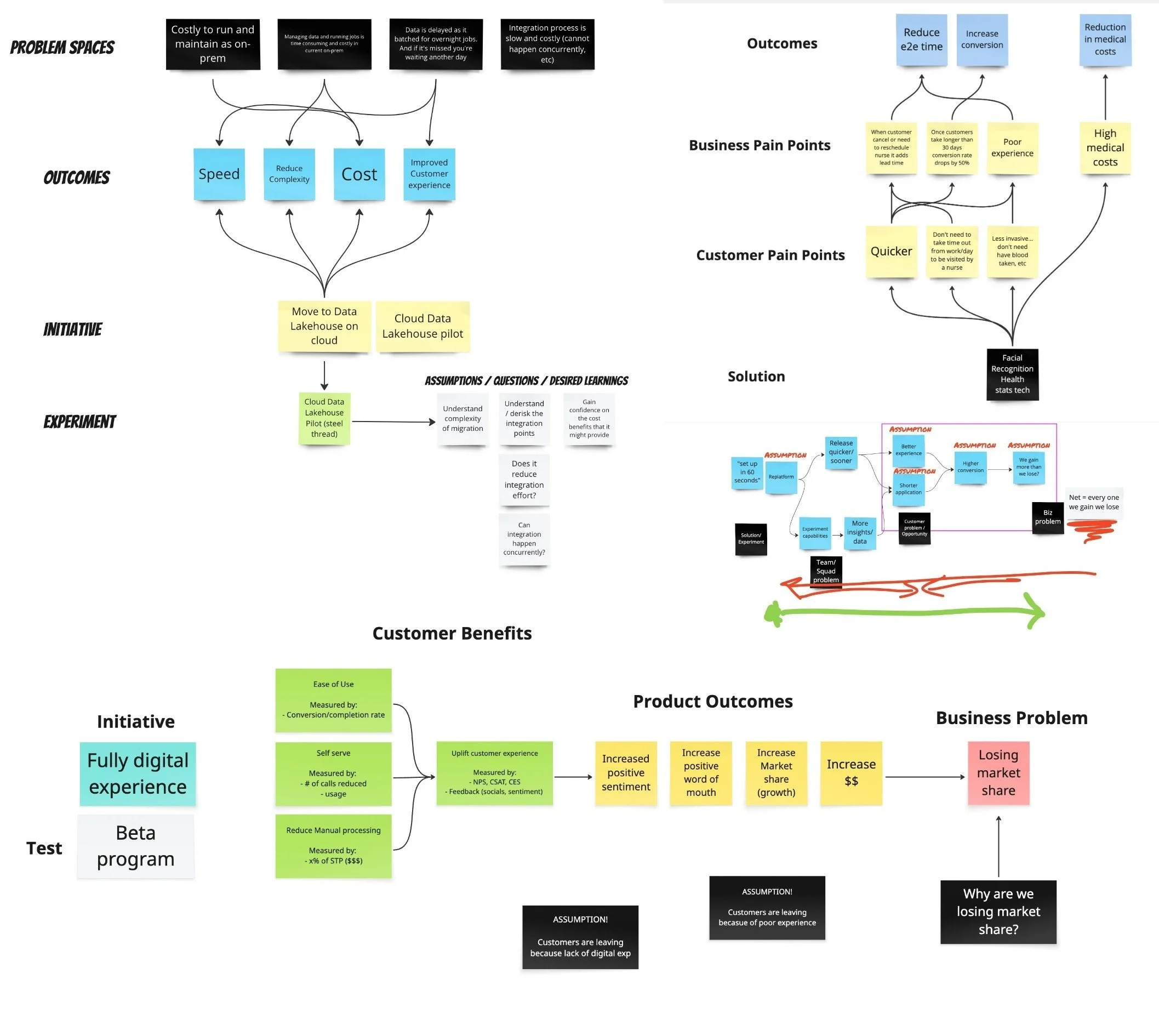







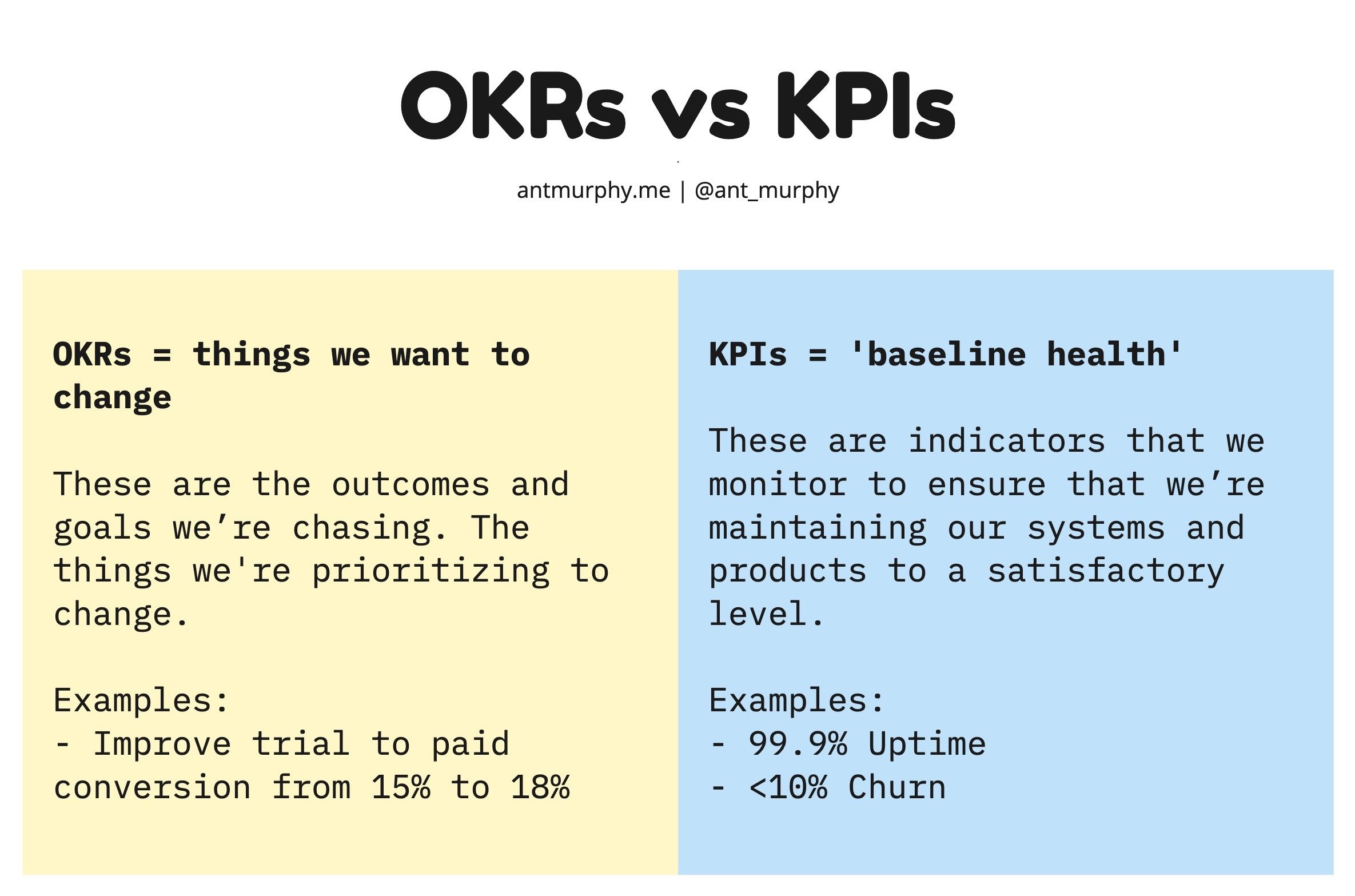

Your OKRs don’t live in a vacuum.
Yet this is exactly how I see many organizations treat their OKRs.
They jump on the bandwagon and create OKRs void of any context.
Here’s what I see all the time…