
The Hardest Part of Product Management is NOT Features, it's People.
Hey I’m Ant and welcome to my newsletter where you will find practical lessons on building Products, Businesses and being a better Leader.
You might have missed these recent posts:
- Unconventional Advice: Stop Reading Product Books
- 8 Habits of Highly Effective Product Leaders
- 4 Steps to Building a Product Strategy
I had a different intro written but I deleted it and replaced it with this post from Stephanie Leue because she said it better (also thanks for the title too 😅)
“No one tells you this before you become a PM:
The hardest part of product management isn't building features or great products.
It's the people.
Even if your strategy is clear, your roadmap tidy, and your team works in almost perfect conditions - one thing remains:
You spend most of your time managing expectations, translating between worlds, calming politics.
Stakeholder management isn't a "soft skill."
It is product work.
Without alignment, even the best strategy will rot.
I've seen PMs feel guilty because they're "not building."
But sometimes, aligning humans is building — it's creating the conditions for the product to survive, or even better, to thrive.” - Stephanie Leue
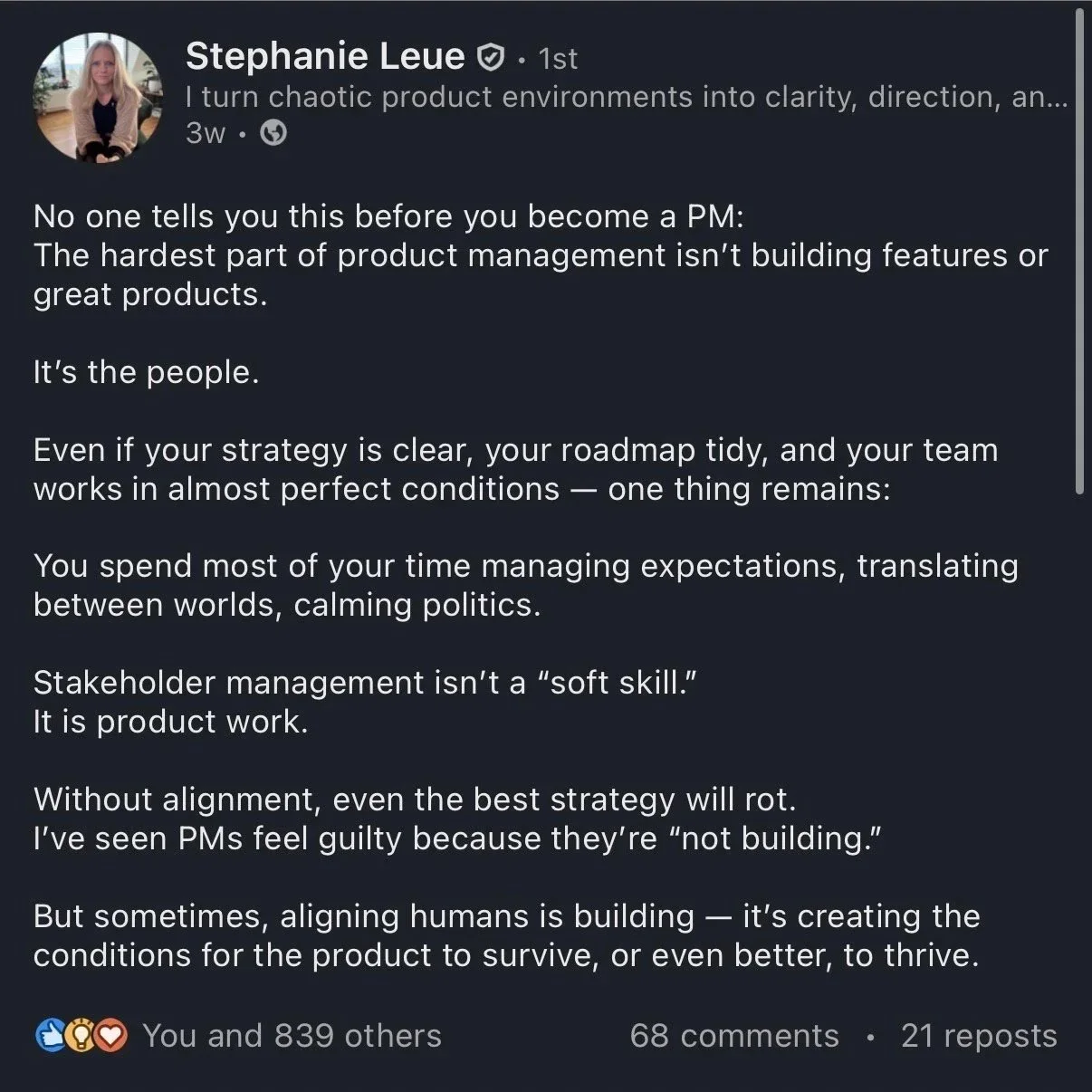
Stephanie is spot on (and someone you should 100% follow by the way!)
I’d say that more than half the coaching sessions I’ve had in the past month have been ‘people’ related; either through influencing, stakeholder collaboration or being a better storyteller.
So I thought I’d share some of my top techniques for mastering the ‘people’ part.
Cognitive Dissonance
This one concept has probably had the biggest impact on my ability to influence more than anything.
It’s also key to explaining why starting with agreement and giving options are both such powerful techniques.
If you’ve been a long time subscriber you’ve probably heard me talk about this before, but in a nutshell;
Cognitive dissonance is essentially 'brain stress'
It happens when you run into something that doesn’t match your beliefs, knowledge and/or understanding of something.
cognitive dissonance is described as a mental phenomenon in which people unknowingly or subconsciously hold fundamentally conflicting cognitions. Being confronted by situations that create this dissonance or highlight these inconsistencies motivates change in their cognitions or actions to reduce this dissonance, maybe by changing a belief, by explaining something away, or by taking actions that reduce perceived inconsistency
Our brains don't like to be contradicted. We don’t like hearing things that don’t align with our world view.
For example, how do you feel when you read statements like; “We don’t do Product Discovery here, it’s a waste of time” or “We fired all our Product Managers and couldn’t be happier!”
They probably evoke some kind of reaction, especially if you’re a product manager reading this.
Now, how much stress you experience is proportional to how important the 'view' is to you and how different the information is.
Maybe you don't care, then all good. Or it’s not too different from what you think is true.
But if it's core to your identity then you're going to feel a lot of stress.
And stress makes us emotional, not rational.
So how is any of this helpful?
Well cognitive dissonance explains:
Why you get push back = what you presented doesn’t align with their world view.
Why sometimes it feels like talking to a wall = too much dissonance and they’ll go into fight-or-flight mode and double down on their point of view.
To paraphrase Simon Sinek; you can't fight 'emotion with logic'.
This is why your well laid out argument and presenting the facts don't work, and why starting with agreement does (reduced dissonance).
Learning to navigate - and ideally avoid cognitive dissonance - has had the biggest impact on my ability to influence others.
Here’s some ways to put this into practice:
1. Start at Agreement
This is one of the most common mistakes I see people make when it comes to influencing. They lead with something that not everyone agrees with and immediately hit cognitive dissonance.
As a principle; it’s much easier to influence someone if you start at a point of agreement and work to disagreement, than the other way around.
So when you’re building your story or presentation, ask yourself, what’s the one thing that we all unanimously agree with?
Whatever that is, lead with that.
Here’s a real example from a coaching session I had this morning.
Context: This Product Manager is presenting to the product committee to get buy-in for additional funding to increase the team’s capacity.
The pitch went like this:
We would all agree that [this part of the product] is unusable (plus a slide with some great data and quotes from users for good measure)
And the biggest problems to solve in [this part of the product] are XYZ
As a result [impact to the business]
Currently we’re not resolve these problems because ABC
Therefore I’m asking for….
Rather than leading with the ask which would likely get immediate push back, or the ‘biggest problems’ which could have some disagreement about whether they were really problems or how big the problems were (this was her original plan). Instead we lead with the one thing she said everyone agrees with and even framed it that way.
Starting with agreement also:
Facilitates collaboration as you’re working together on something you agree with
Creates an anchor point you can always come back to if disagreement comes up later
Creates better flow as you’re not getting bogged down in something early on, you can at least get more of your point across
2. Give Options
Giving options (and the next 2 points) are my most used techniques. One that I use almost daily in everyday conversations even.
The idea of giving options is to put decision making back into their hands.
In doing so you reduce cognitive dissonance because you’re no longer saying; “We should do X” it’s now “what do you think we should do?”
This works for a few reasons:
It’s collaborative. Not you vs them = less cognitive dissonance.
Options are perceived as thorough. You’ve explored multiple options and weighed them up as opposed to seeking data that supports your idea.
Easier to compare. Options facilitate easier decision making since you can compare them to each other - i.e. oh this isn’t ideal but it looks like the best option out of the 3.
You play to their ego… in a good way… by showing that you value their opinion and input
You avoid status games of people needing to feel like the smartest person in the room - I’m sure you’ve worked with that one person who always has to say something or interject just to look/feel important.
They still get to feel like they’re in control and the one making the final decision. This is particularly important for situations where you’re not empowered or stakeholders are worried about losing control.
You can also influence further by getting more clever with how you present the options.
Here are some tips:
Use evidence: back it all up with data and summarise your approach and research done. This makes your options look comprehensive, you did the work and these are truly the only viable options - there’s no option D!
Add a ‘decoy option’: throw in an obviously bad idea. That can be a decoy and make the other options look better but also narrow things from 3-4 down to 2 options.
Recommendation: Of course you’re still entitled to an opinion so feel free to add in your recommendation but remember that influence isn’t about getting them to 100% align with you, it’s about influencing them to be closer to your recommendation.
3. Questions > Statements
Rather than making statements or pointing things out, try to reframe things as questions.
For example, instead of saying:
"that's not correct”. Ask; "tell me more about how you got to this conclusion?"
"there's no user problem" Ask; "what user problem do you see this solving?"
"you missed X" Ask; "how have you considered X?”
Or my personal favorite I got from an amazing product leader I worked with; rather than saying “I don’t understand” ask; “Tell me more?”
Questions are much less combative than negative statements.
In a way they’re disarming to cognitive dissonance because a statement you might take personally but a question, less so.
Of course the common objection is this sounds a lot and wouldn’t everything take longer this way?
Perhaps. But remember your goal is to influence, not efficiency.
Having no-filter and ‘cutting through’ isn’t helpful if all you do is put people offside and run into a wall because you’ve hit cognitive dissonance.
I’d rather take longer, put more effort in, and actually change things than throw in the towel because “it’s not my job to make sure I don’t hurt people’s feelings.”
4. Prefix your questions
This is a great little trick that once you learn it, you’ll start to notice other people use it too.
The tactic is to prefix statements (or ideally questions, refer above) with things like:
“You’ve probably already considered this…”
“You’re right…”
“Yes and…”
That last one you’ve probably already heard about. The classic ‘yes and’ which works because we acknowledge what they said and rather than objecting with a ‘but’ we build upon it. Again less combative.
But my personal favorite is the first one.
Leading with “You’ve probably already considered this…” and then mixing it with reframing things as a question.
I use this one all the time to:
“You’ve probably already considered this… tell me more about how this will work for [X type of user]?”
“You’ve probably already considered this… how would this contribute to [OKR]?”
“You’ve probably already spoken to legal… what was their feedback on this?”
Etc…
It’s a great disarming statement because there’s a subtle tone of; “you’re really great at your job so I know you’ve already thought about this. I’m only asking to hear what you think”
Again it’s non-combative.
FYI I share more influencing and communication tactics, including how to practically build trust in the Stakeholder Management Essentials course. I also have plans to do a specific deep dive into influencing covering all these techniques and more. If you’d be interested in that, let me know by commenting below.
Bonus: Don’t Sell Benefits, Reduce Risk
One bonus one before this post becomes a novel.
If you’re like me, you probably get frustrated when stakeholders would still refuse to do an obviously great idea.
That used to drive me nuts.
The data would be clear. The ROI was there. But still they would refuse to buy-in.
Understanding cognitive dissonance really helped me unpack half of the puzzle but the other half came from reading the book The Jolt Effect.
The Jolt Effect is a B2B sales book but really it’s a book about persuasion. After all that’s what sales is.
But it wasn't your typical sales book. There’s no dirty sales tactics like false urgency, fear and pressure.
Instead it was actually a book about how those tactics don’t work - backed by empirical evidence, which was the best part!
The tldr was that the biggest barrier to someone making a buying decision (in a B2B sense) is in fact loss aversion.
Loss aversion is a cognitive bias where the potential loss is felt more than the potential gain.
As they say in the book; people are more concerned about 'messing up than missing out’.
Consider what this means in terms of trying to generate buy-in on something.
Your stakeholders are more concerned about the idea not working than any potential upside.
And this was why when I tried to sell them on all the clearly amazing benefits I still wasn’t getting any traction.
Because the benefits don't matter as much when you’re more concerned about 'messing up’.
This is especially true in organisations where people may feel as though their job, bonus or potential promotion are on the line.
And understandably so.
Whilst positive results would help secure those things, messing up could mean losing them, and we typically put more weight towards the negative than the positive - i.e. “I’d prefer to not rock the boat and be guaranteed to keep my job, than to shake things up for the chance that it’ll improve things…”
Sad reality. But it really explains why so often companies get into a rut and lose all innovation.
So to make this actionable, whilst yes you still need to sell on the benefits and outcomes, you need to also address the ‘fear of messing up’ side.
You need to make saying yes feel safe.
Safe that if it does go wrong that it won’t be career ending.
Here's a some common levers I pull to achieve this:
Make it smaller? Can you time box it? Run a pilot?
Directly address or remove their risks/concerns?
Get social proof of similar contexts doing the same thing (if it worked for them it’ll work for us too)
Wrap up
Ok that’s a lot to digest so I’ll leave it here.
I honestly think I could write a book on this topic, there’s so much more I’ve learned over the years, much of which has been through trial and error. Learning new things like ‘loss aversion’ and then experimenting with different approaches, seeing that works.
But instead of writing a book, something that I think would be more practical and helpful would be to do an ‘Influencing Masterclass for Product Managers’ course/workshops on Product Pathways. If you’d attend something like that, comment below. The feedback I get here will be a key data point on whether there’s enough interest to get it off the ground.
And maybe I’ll leave it on this…
If I had to prioritise which ones to start with, I’d go with the start:
Start at agreement
Give options
Both are really easy to do and are ‘quick wins’ so to speak.
I’d then recommend to start experimenting with some of the techniques I shared in the cognitive dissonance section like reframing things as questions.
After all, the best strategy, roadmap or idea doesn’t mean anything if you can’t get others to buy-in and align to it.
So I hope these techniques help increase your influence.
As usual, forward this to someone you know who would really benefit from it. It’ll help them but it also helps this newsletter as a large portion of subscribers come from referrals.
Thanks for reading!
Top Posts
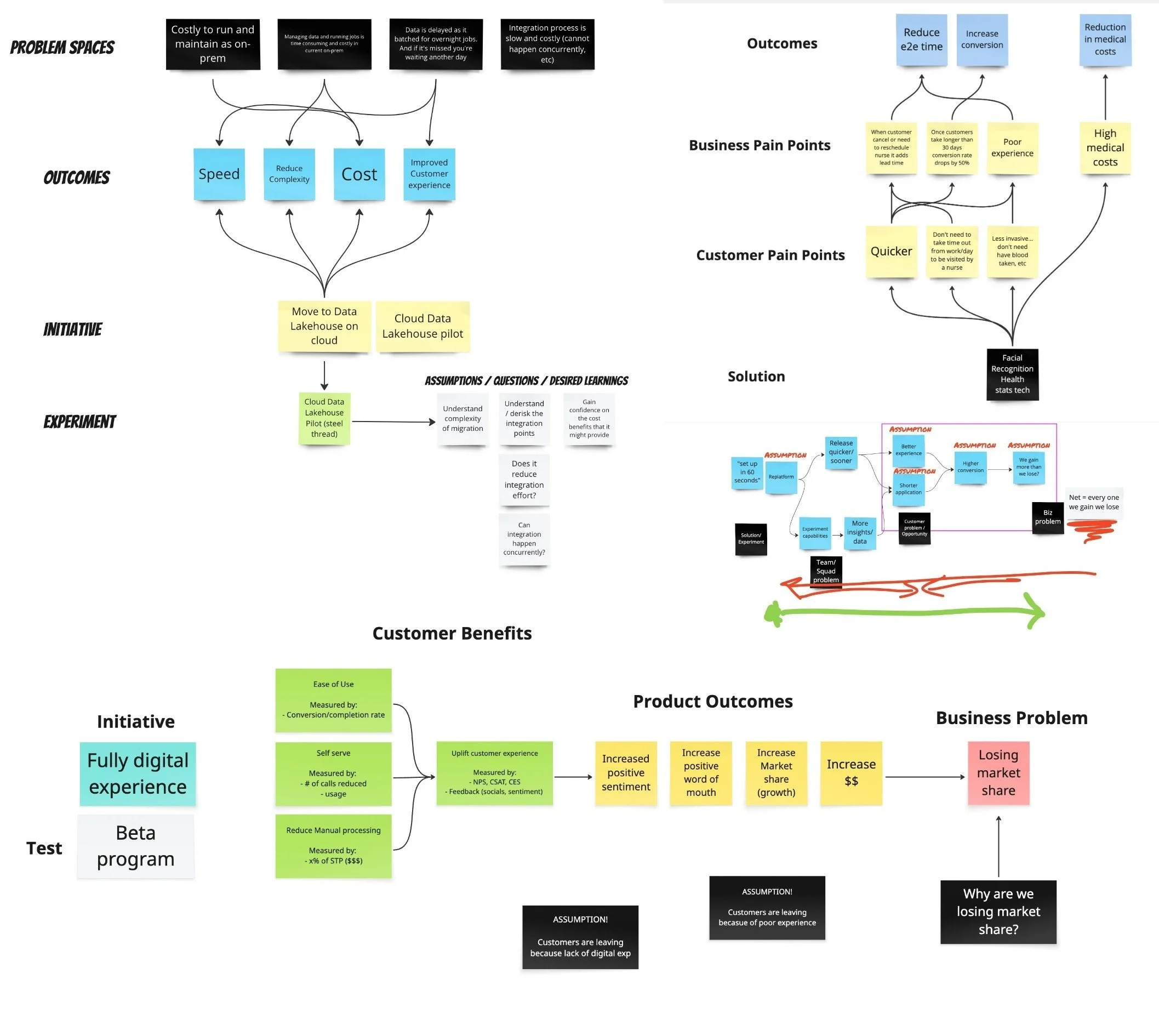







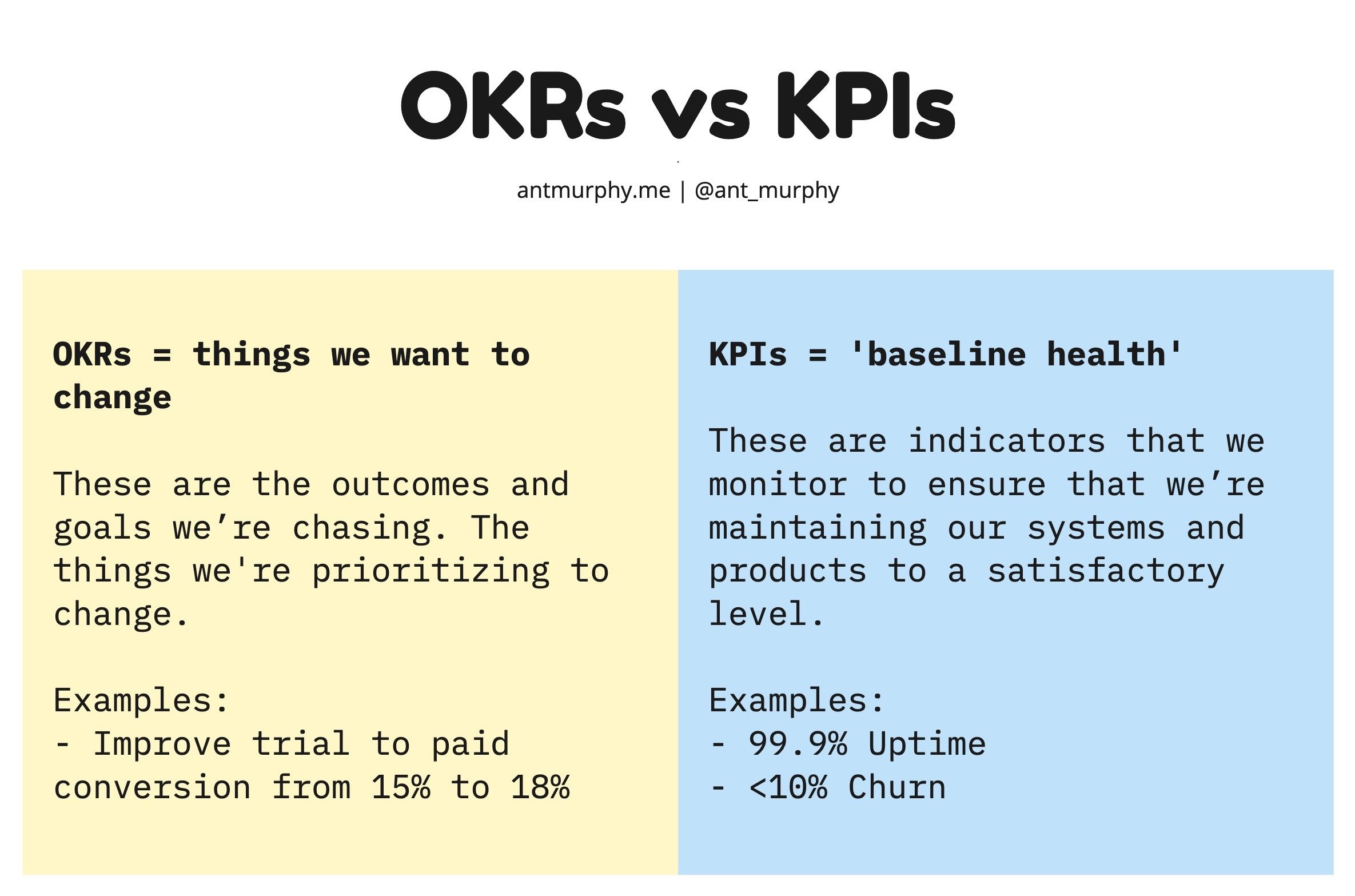

Your OKRs don’t live in a vacuum.
Yet this is exactly how I see many organizations treat their OKRs.
They jump on the bandwagon and create OKRs void of any context.
Here’s what I see all the time…