
Unconventional Advice: Stop Reading Product Books
Hey I’m Ant and welcome to my newsletter where you will find practical lessons on building Products, Businesses and being a better Leader.
You might have missed these recent posts:
- 8 Habits of Highly Effective Product Leaders
- 4 Steps to Building a Product Strategy
- 5 Steps From Features to Outcome Roadmap
I know this sounds counterintuitive coming from someone who writes a product newsletter, but I truly believe that if you're a senior product person or product leader, you should stop reading product books.
Okay… ‘stop’ is a strong word. ‘Less’ would be more nuanced and appropriate, but let me explain why and what I recommend instead.
Of course, I'm not saying product books are bad. They're incredibly valuable.
But the value is highest when you’re starting out and building a foundation. After a certain point, the returns will diminish.
That fifteenth book on product discovery isn’t giving you any new mental models. It's just repackaging what you already know.
And ironically, it’s because we’re not learning that we keep reading.
Confirmation > Contradiction
There’s two things our minds like:
To be told we’re right (confirmation bias)
Telling someone else they’re wrong (another version of 1)
FYI we like 2 more than 1. Which explains why certain content does so well on social media. All the keyboard warriors love to come out when there’s some ‘hot take’, ironically helping to boost the post more!
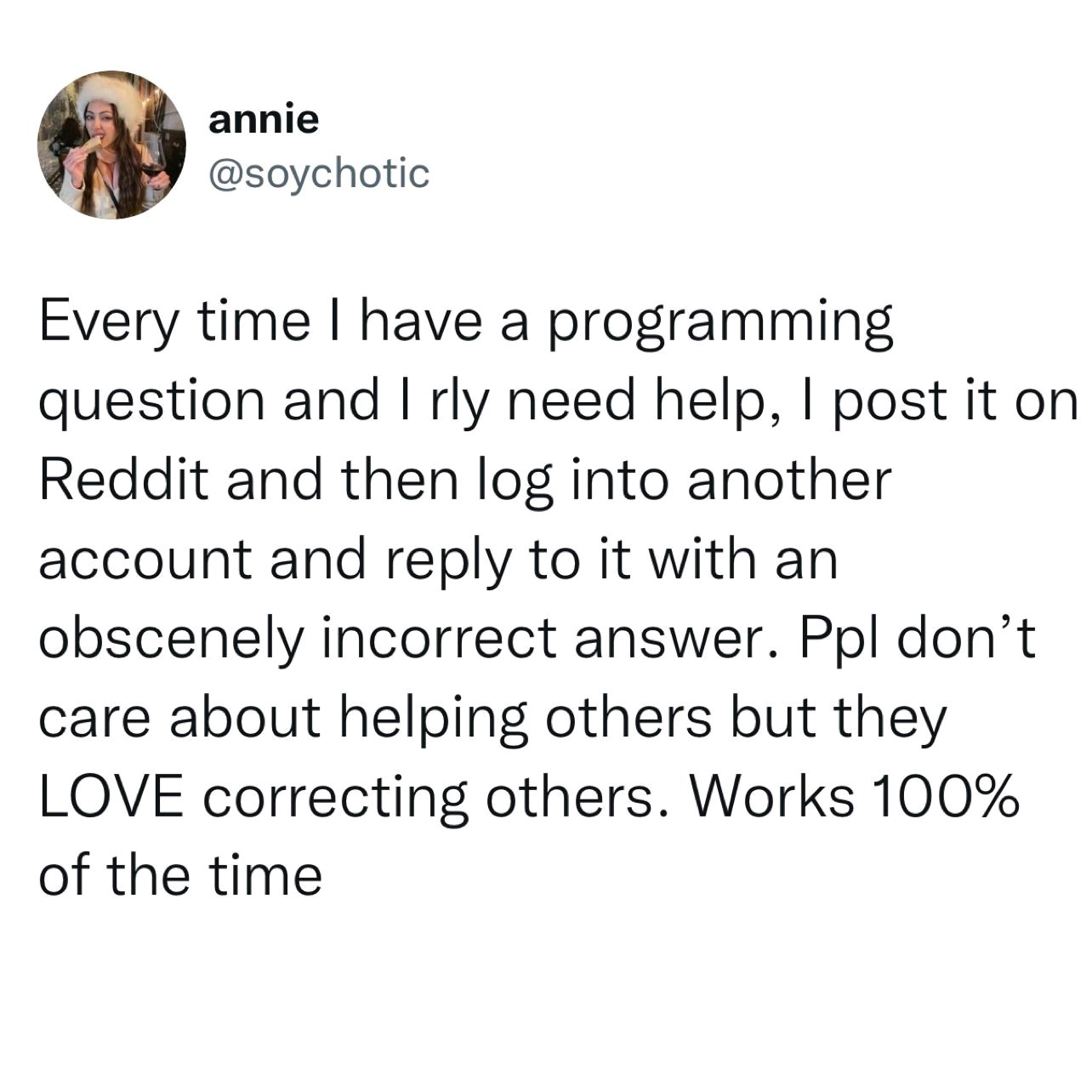
Known as Cunningham's Law: "the best way to get the right answer on the internet is not to ask a question; it's to post the wrong answer."
It’s also why AI loves to tell you “great question” or “you’re so right”. It’s all designed to prey on this confirmation bias and desire to be confirmed, not contradicted.
But whilst it’s nice to be told you’re super smart and doing a good job, it’s not what’s going to help grow your career, and we all know this.
Growth happens outside of your comfort zone as they say.
This means actively seeking out contradiction instead of confirmation and why I say stop reading (more) product books.
Instead, I recommend the product leaders I coach go deeper into fields like:
Design
Marketing
Leadership
Psychology
Engineering
Entrepreneurship
Finance and Business
Behavioural economics
Doing so has had a profound impact on my career, helped me ship multiple successful products and run two successful businesses today.
Adjacent Skills Matter
Product is a team sport. As a Product Manager you bring a depth of knowledge and capabilities in terms of strategy and shape the product to solve the most valuable problems. But you can’t design, build, launch, market, sell, support and manage the product on your own.
Different people bring different capabilities to the table to make great products a reality.
This means the more you know about different disciplines the more you can identify when you need to bring those people in.
It also reduces the back-and-forth.
How much quicker would a team move if there was no need to explain why or what something is (i.e. why we should have the user flow in this way, or why there’s a technical limitation on X).
But of course it’s not all about making things smoother.
Learning adjacent fields, especially psychology, marketing, and sales, have fundamentally changed how I approach products.
Not to mention that some of these skills are necessary to take that next career step.
As you progress closer to CPO (Chief Product Officer) it becomes less about refining your product skills and more on leadership, business acumen, strategic thinking and influence. You’ll struggle to have a meaningful relationship with the Chief Commercial Officer or CMO (Chief Marketing Officer) if you think their roles are useless and “all you need is a great product that sells itself.”
In Practice
I'm not suggesting you never read another product book again. You should keep up to date with current trends and emerging best practices. Plus you will occasionally run into something that is thought-provoking and novel, so you have to keep tabs on things.
There’s also a reality that sometimes we can do with a good reminder - I know I do and appreciate it when it happens.
But the next time you’re choosing your next book, maybe consider expanding your range? Something that will give you a new perspective. Especially if the last several books you read were product-related ones.
For me, I limit product books to about 1 in every 10 books I read (maybe it’s been less the last 2 years) but that’s roughly where I hover these days.
If you would like some recommendations of non-product management books (some are still product-adjacent) that have had a profound impact on me, here are my most recommended ones with loose categories to make it easier.
Behavioural Economics:
Marketing (with a bit of Behavioural Economics and Psychology)
Influence/Psychology:
Business/Interesting Concepts:
Sales:
Leadership/Transformation:
(No affiliation or affiliate links. I get $0 for recommending these, they’re simply books I’ve found interesting and have given me a different perspective)
Hope that was helpful.
Let me know if it resonated or if you have a book that you’d add to the list, just drop a comment below and perhaps I’ll start a non-product books for product people reading list or something.
Ciao
-Ant
Top Posts







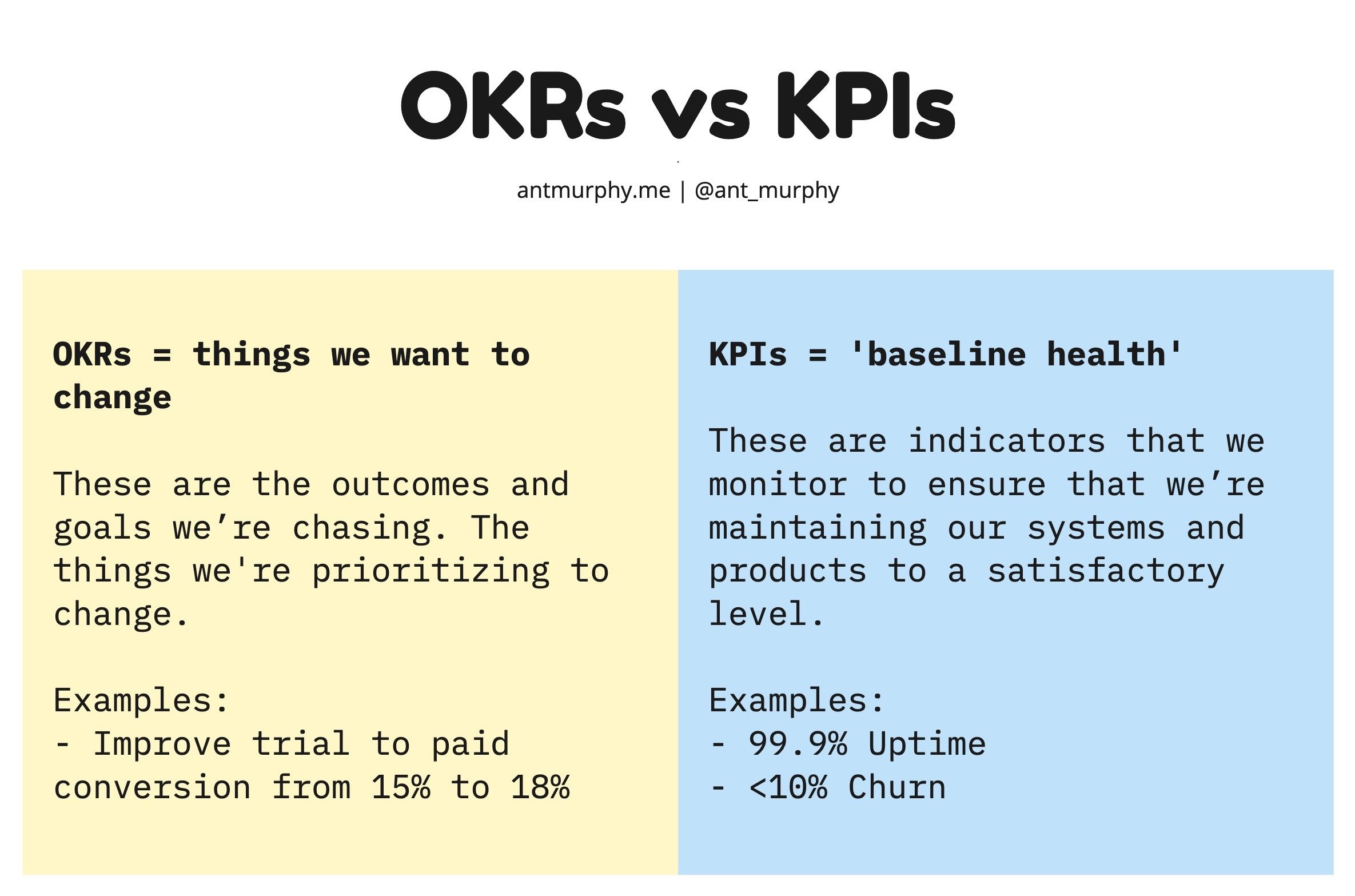

Your OKRs don’t live in a vacuum.
Yet this is exactly how I see many organizations treat their OKRs.
They jump on the bandwagon and create OKRs void of any context.
Here’s what I see all the time…