
5 books that changed the way I approach product strategy
Top 5 books that had the greatest impact on how I approach product strategy and what I took from them.
Hey Ant here, I started this newsletter to share the lessons I wish someone had told me 10+ years ago early in my product career. Expect to find practical lessons on building products, business and leadership. If you prefer podcasts or videos, check out my YouTube.
Recent posts you might have missed:
- How product companies operate without BAs, Scrum Masters, Release Managers, etc
- Product mistakes I won't repeat in 2026
- How Product is Changing in 2026
FYI my next live stream is in a week and it’ll be on ‘You Don’t Need Another Prioritization Framework: Just these 4 components’
Because you don’t need another prioritization framework. You’ve probably tried them all.
My goal with this live stream is to help you stop reaching for a formula and start making decisions from first principles. I’m going to share the mental model I use to do exactly that.
Join, it’s free!
Quick post this week. I’m travelling so things are a bit everywhere - sorry!
If you’ve been in product long enough, you realise product strategy isn’t about filling in templates.
It’s not a checkbox activity and it’s certainly not your vision and roadmap.
Instead it’s messy and requires judgement.
A lot of that judgment gets built over time in the trenches. But I’d be misleading you in saying that’s all you need.
Truth is I’ve learned a lot from others; amazing mentors, videos, courses and my own self-learning.
One of the most impactful avenues has been from books.
All this is to say, you can short-circuit things. Not everything has to be learned first hand. It’s ok to ‘stand on the shoulders of giants’.
In that spirit I thought I’d share the 5 books that gave me the most impactful mental models when it comes to product strategy.
1. Playing to Win by Roger L. Martin
Early in my career, I didn’t have the words to describe what product strategy was. I kinda knew it wasn’t what most people were telling me (like your roadmap). It felt deeper but I just couldn’t articulate it.
Reading ‘Playing to Win’ by Roger L Martin was the unlock I needed.
It gave me the words to describe what strategy is - and isn’t!
And as a result it no doubt had the biggest impact because it was foundational.
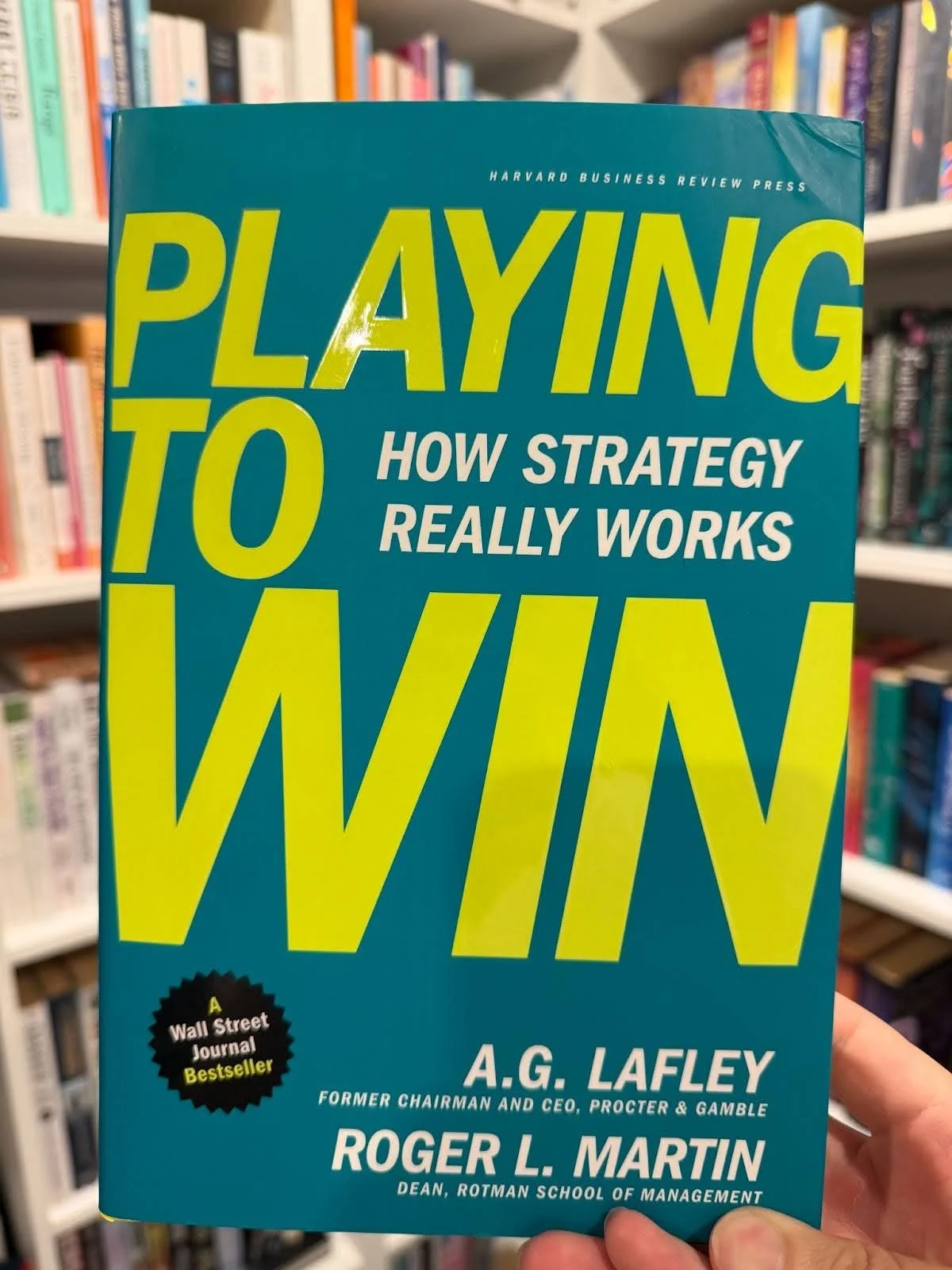
Roger L Martin defines strategy (today) as;
“An integrated set of choices that compels desired customer action.”
This of course is his revised version but it’s not too far from the original definition I read all those years ago.
The key words here being (to define the mental model now):
Choice
Integrated
Desired [outcome]
Choice means at the end of the day strategy is really just a set of decisions. Key decisions.
It’s deliberately choosing.
Choosing to be different - or the same.
Choosing to do something - or NOT do something.
Choosing to be known for something - or to NOT associate with something.
Etc..
The list can easily go on. But this is the crux of strategy. It's intentional choice.
Choice also is a means to creating focus.
If you’re strategy isn’t helping you to eliminate work, then you’ve missed what it means to actually choose.
Now of course this isn’t the full picture.
Integrated means your choices must work together.
Richard Rumelt, author of Good Strategy, Bad Strategy would say your strategy needs to be cohesive (we’ll get to his book in a sec).
This is where most companies I see go wrong. They make these disparate choices which results in a lot of dog-fighting on competing priorities.
And then you have your desired outcome whether that be a change in customer behaviour, as framed in Roger L Martin’s new definition or whether it was more aligned to his previous ones about being ‘best positioned on a playing field of your choosing to win’.
Whatever that desire is, your choices are helping you to get there.
This is where people will describe your vision - or ‘winning aspiration’ in the book - as the WHY and your strategy as the HOW. Which is correct but a bit oversimplistic.
2. Good Strategy Bad Strategy by Richard Rumelt
Good Strategy Bad Strategy, man such a good book!
This book gave me two key things:
A mental model for developing a strategy
And helped me understand why bad strategy happens so I can help companies fix it (my day job today)
You might have already read the book or even heard me talk about Richard Rumelt’s ‘kernel of good strategy’
A diagnosis
A guiding policy
A set of coherent actions
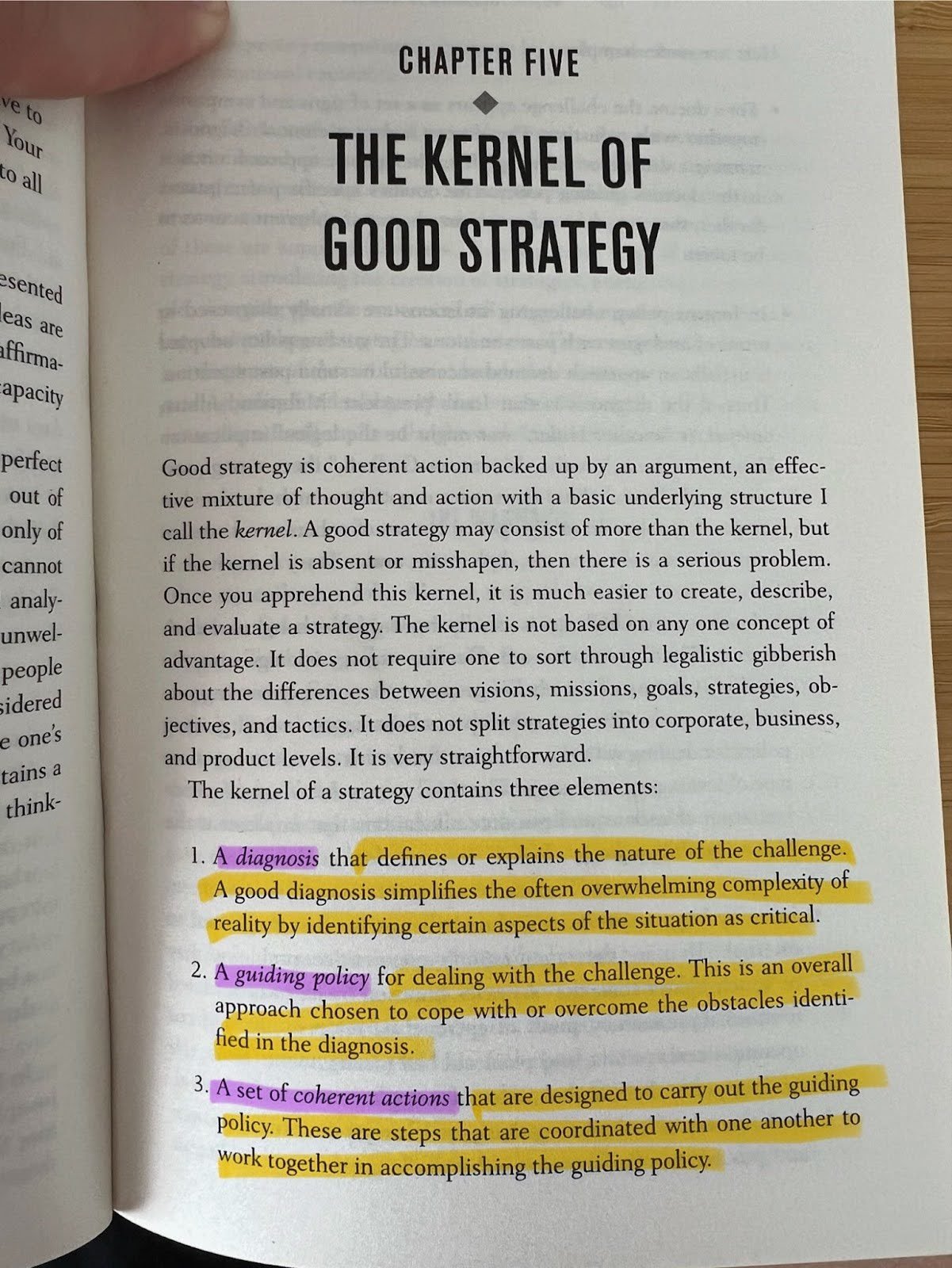
Credit: Good Strategy Bad Strategy, Richard Rumelt. The Kernel of Good Strategy
This framing helped me further refine my own strategy frameworks and processes. It definitely help me take things to the next level.
It also helped me understand why bad strategy happens in companies.
And whilst this may sound relevant only to me, as somebody who spends their days helping companies transform to the product mode, it’s still extremely relevant to all product leaders.
Product isn’t like the books, you’re likely going to end up in a company one day where bad strategy is happening. Having a better understanding of how to diagnose this and improve strategy might be the most important thing you do in that role.
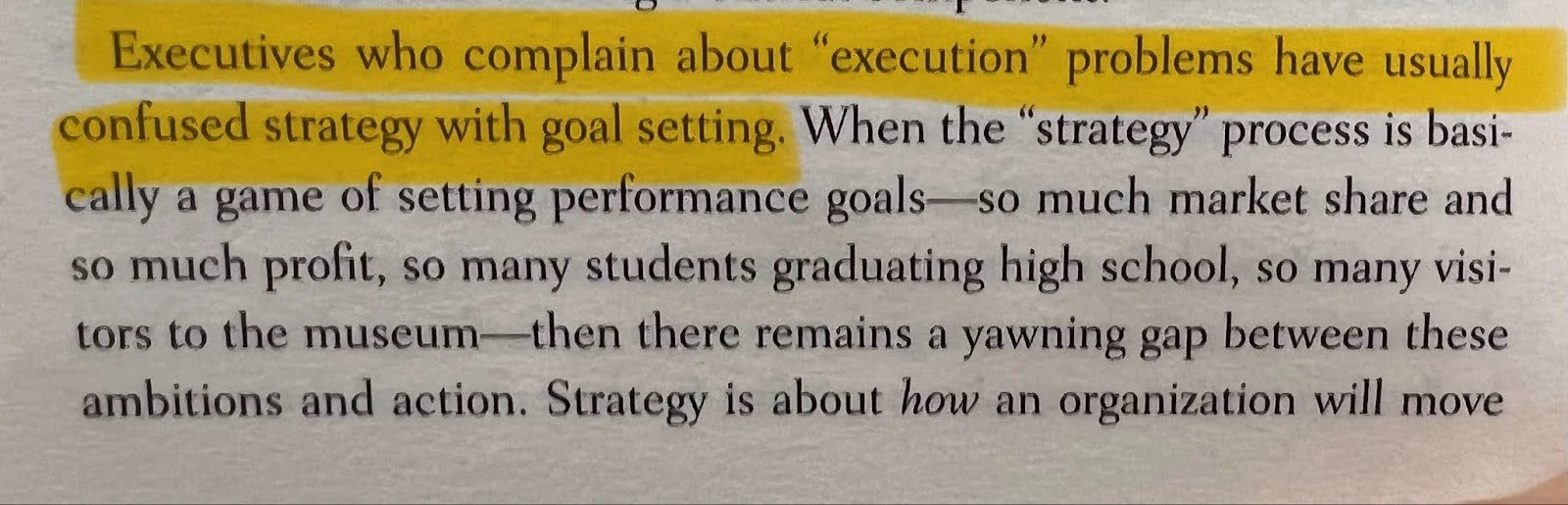
I won’t go through all of them - you should read the book! - but as an example; confusing strategy with goal setting.
Quick interruption - sorry I know, how bad of me!
Most people wait for their career to happen to them but a few take control and lead it.
The fact you’re reading this means you’re not the majority.
I know you’ve likely already mapped out where you want to be by the end of 2026. The only question remaining is: Will this year be the year you take action?
There are 3 days left to secure $100 off the Product Mentorship (includes the upcoming Product Strategy in Practice course) Use code MENTOR2026
This isn't for everyone. It’s intentionally designed for those with high agency and ready to take control of their career rather than waiting for it to happen to them.
Ok, interruption over.
3. Thinking in Bets by Annie Duke
Working from that foundation I learned many years ago from Roger L Martin’s book Playing to Win, if strategy is all about choices, then you can conclude that to get better at strategy, you need to get good at making decisions.
However the choices you need to make in your product strategy are fundamentally different than everyday decisions like ‘what am I going to have for lunch?’
This is because strategy is about making decisions today based on a what you think will be true in the future.
This makes things inherently uncertain.
Which is where the book "Thinking in Bets" by Annie Duke comes into the picture.
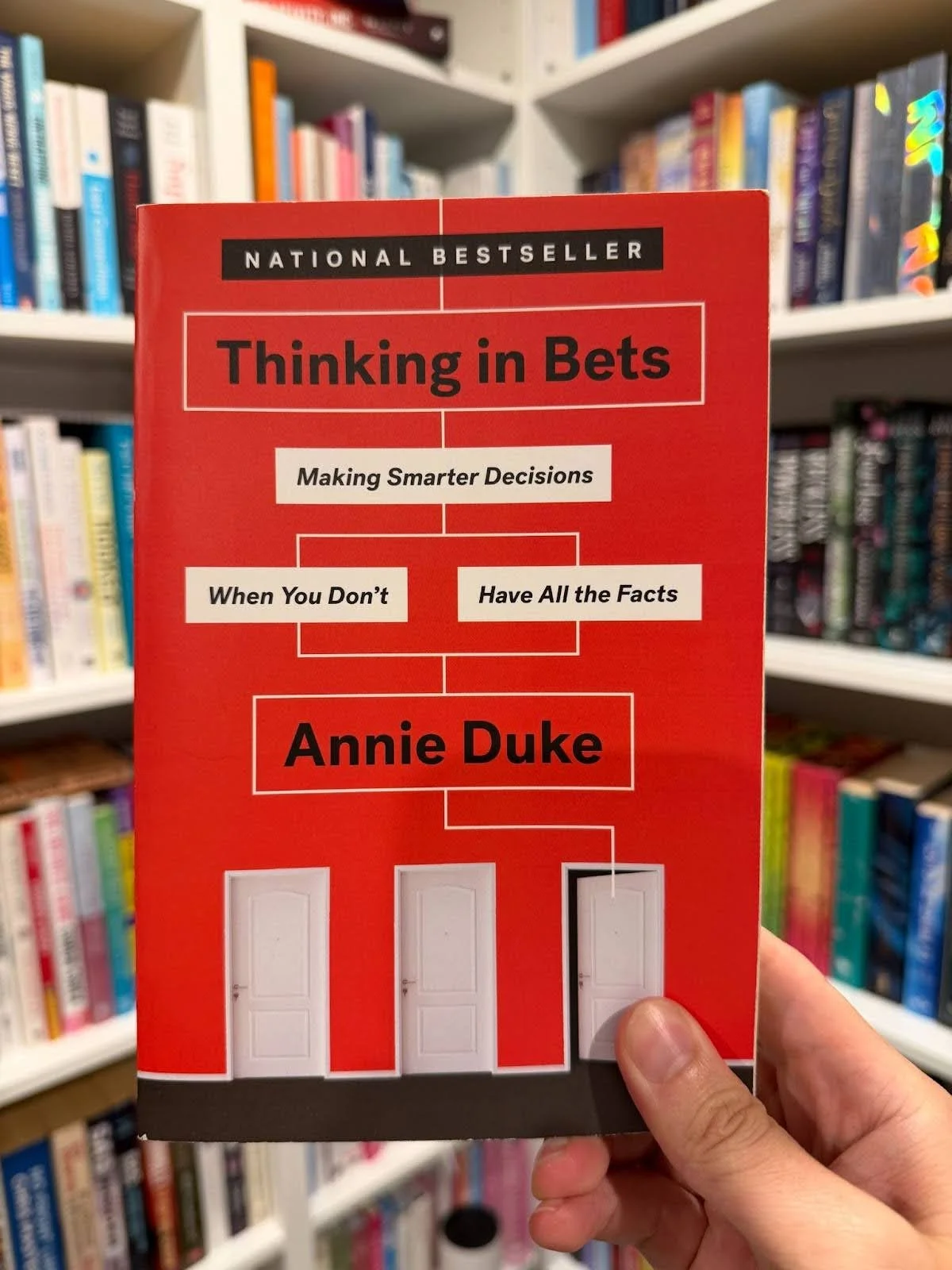
From poker champion turned business consultant, Annie Duke. The book is a masterclass in making decisions when there’s uncertainty.
I got so much out of this book but some key things related to product strategy:
It helped me better frame strategic choices as ‘bets’.
It helped me improve my decision quality.
And it was a great reminder of why you should separate outcomes from decisions. You’re not as in control as you might like to think. Sometimes we get lucky, sometimes we don’t. The important part is knowing when it’s you vs luck (or a bit of both).
4. Crossing the Chasm by Geoffrey Moore
I put Crossing the Chasm in here for one main reason;
It was where I was first introduced to the conception of the Diffusion of Innovations - a mental model that has become one of the most helpful concepts I’ve come across.
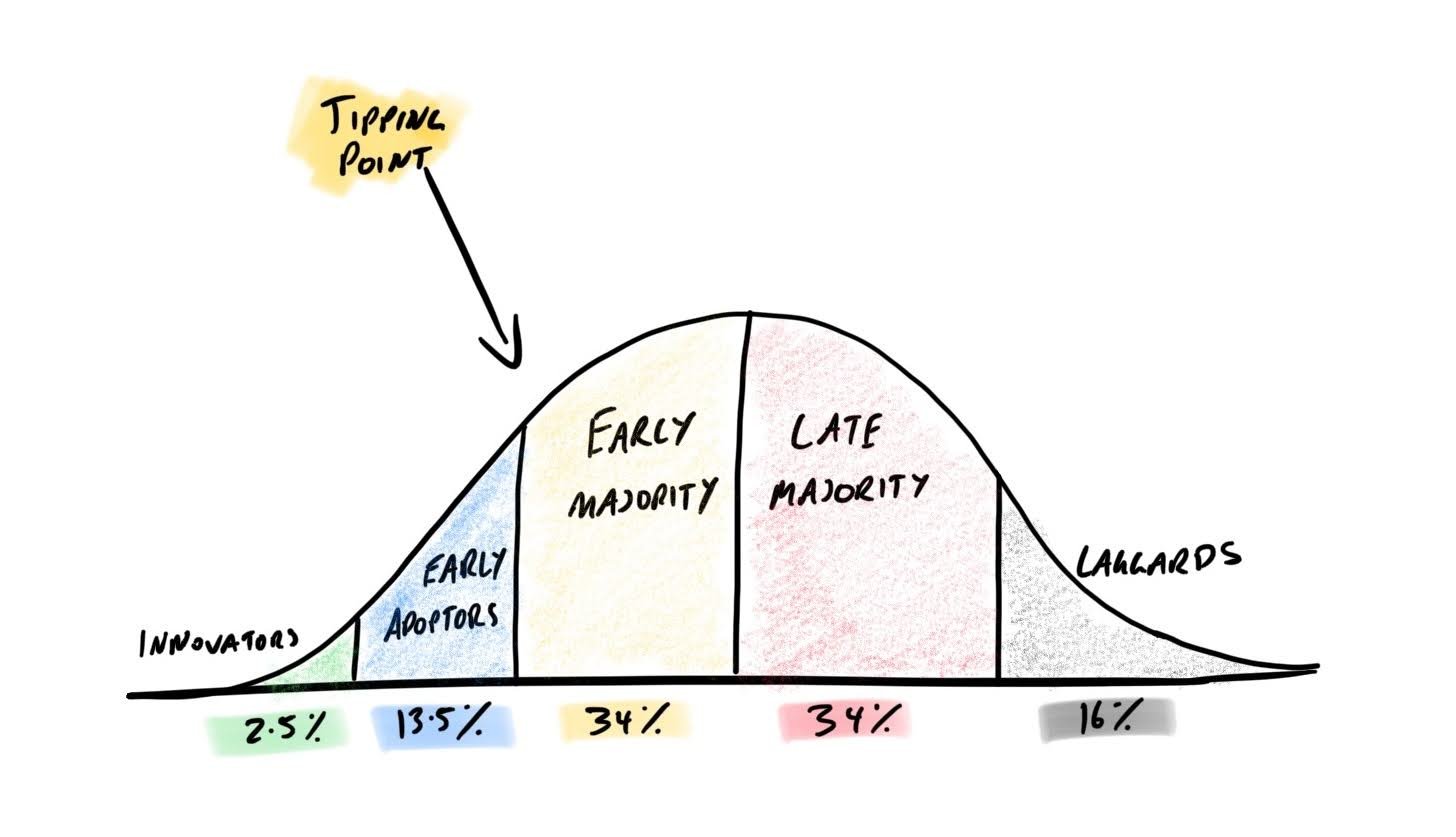
Diffusion of Innovators
It’s helped me with launching multiple 0-1 products.
It’s also helped me with the product coaching and transformation work I do today.
Among many other things.
Whilst not perfect the notion of leveraging early adopters and innovators to ‘cross the chasm’ has proven to be a valuable mental model to have.
5. 7 Powers by Hamilton Helmer
7 Powers by Hamilton Helmer and Good Strategy Bad Strategy both gave me several different mental models for thinking about leverage.
I define leverage as something that will give you disproportionate results - you could call these moats too.
One example is network effects which you’re probably familiar with.
A network effect is where your product becomes more valuable as the number of users (or nodes in your network) increases.
I generalise 'nodes' in brackets because whilst network effects are usually based on the number of users it's not always.
For example, in the early days of the app store, more apps made the iPhone more valuable. Of course was two sided because the more people who bought iPhones the more developers built apps for it - which is a good example of when a network effect becomes a flywheel (in the honorable mentions below)
These are all useful concepts to be aware of when it comes to product strategy.
Because once you’re aware of them you can start to identify opportunities for applying them to your products.
For those wondering, the 7 powers are:
Counter-Positioning
Network Economies
Scale Economies
Switching Costs
Branding
Process Power
Cornered Resource
Honorable Mentions
Here’s a few more bonus ones that didn’t make the top 5 cut but have also shaped my thinking in important ways too when it comes to product strategy:
Thinking Fast and Slow by Daniel Kahneman: another one on improving decision quality but it also extends into helping you understand user behaviour better.
Business Model Generation by Strategyzer: for practical ways to define and test your business model.
Good to Great by Jim Collins: the book on flywheels!
Michael Porter's HBR article: the one on competitive strategy I read many years ago and had a similar effect to Playing to Win where it helped build my strategy foundation.
Marty Cagan's framing that "product strategy = deciding what problems to solve". Another foundational one.
Art of War by Sun Tzu: some real timeless strategy principles in there
Diary of a CEO by Steven Bartlett: Which I was talking about yesterday! We both agreed it was surprisingly a good product book. Plenty in there on strategy and leverage. Same bucket as 7 Powers.
Bonus mentions from my Linkedin comment section
Competing Against Luck by Clayton Christensen
Competition Demystified by Bruce Greenwald
Built by Tony Fadell
Art of Action by Stephen Bungay
The "Incerto" series: Fooled by Randomness, The Black Swan, and Antifragile by Nassim Taleb
What else would you add?
p.s. Reminder there’s only 3 days left to get $100 off the Product Mentorship.
And if you’re interested, join us next week for ‘You Don’t Need Another Prioritization Framework: Just these 4 components’ live stream.
Hope to see you there!
Top Posts
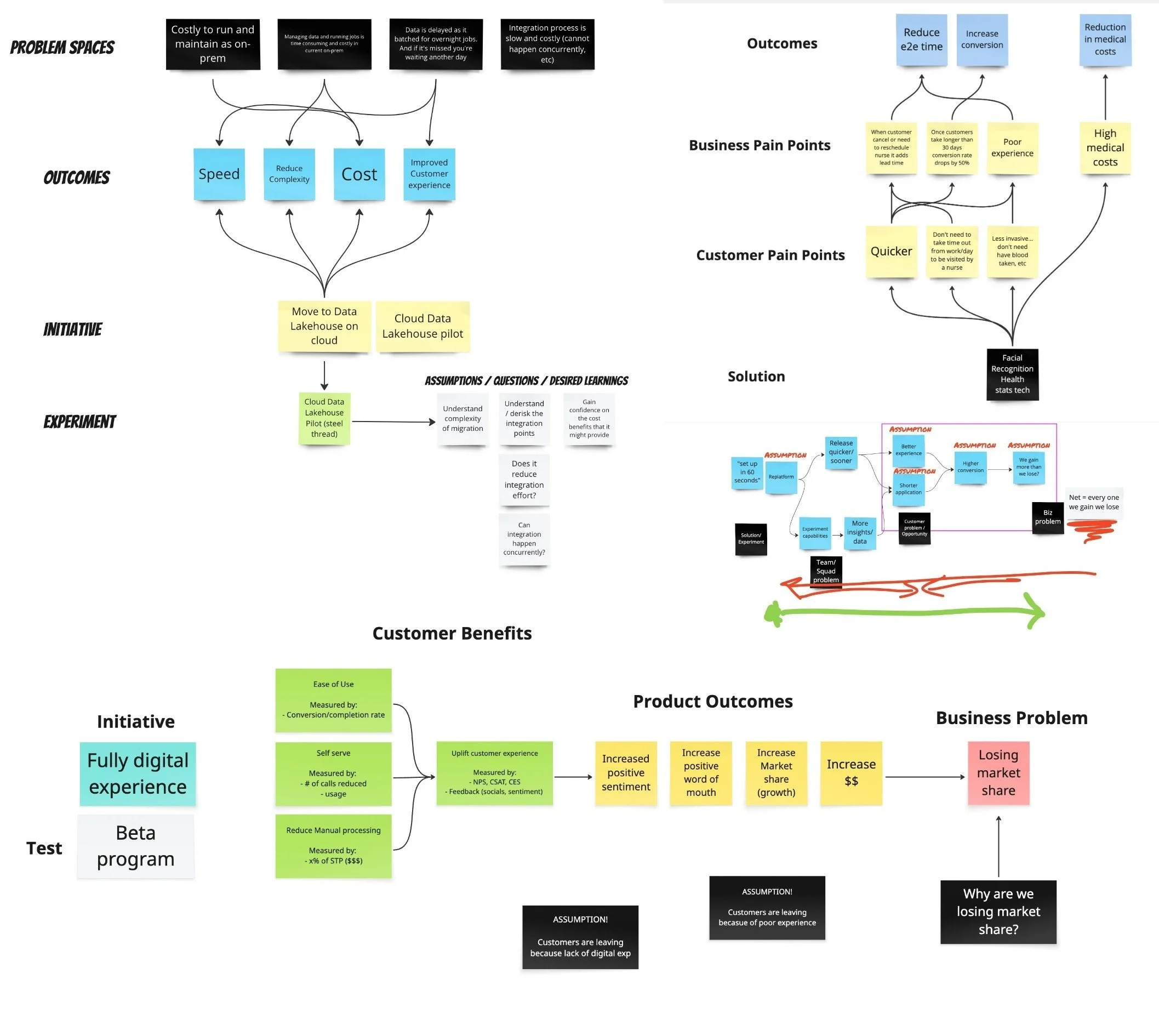








Your OKRs don’t live in a vacuum.
Yet this is exactly how I see many organizations treat their OKRs.
They jump on the bandwagon and create OKRs void of any context.
Here’s what I see all the time…