
Free Annual Planning Workshop Template
Lightweight workshop for annual (or quarterly) planning that focused on outcomes, not outputs.
Hey Ant here, I started this newsletter to share the lessons I wish someone had told me 10+ years ago early in my product career. Expect to find practical lessons on building products, business and leadership. If you prefer podcasts or videos, check out my YouTube.
Recent posts you might have missed:
- 5 books that changed the way I approach product strategy
- How product companies operate without BAs, Scrum Masters, Release Managers, etc
- Product mistakes I won't repeat in 2026
For those who missed yesterday’s live stream you can watch the recording here.
I appreciate all the shoutouts at the end. I'm glad the stream was super valuable!
Next live stream will be going deeper into the role strategy plays in prioritization: ‘You Don't Have a Prioritization Problem, You Have a Strategy Problem’ and what you should be doing about it.
Register here. See you there.
The other day I was asked in the Product Mentorship if I had a good annual planning workshop template.
And as usual, when I get the same question multiple times or something proves useful, it makes its way to sharing with all of you here.
This is my go-to lightweight annual planning template (link at the end).
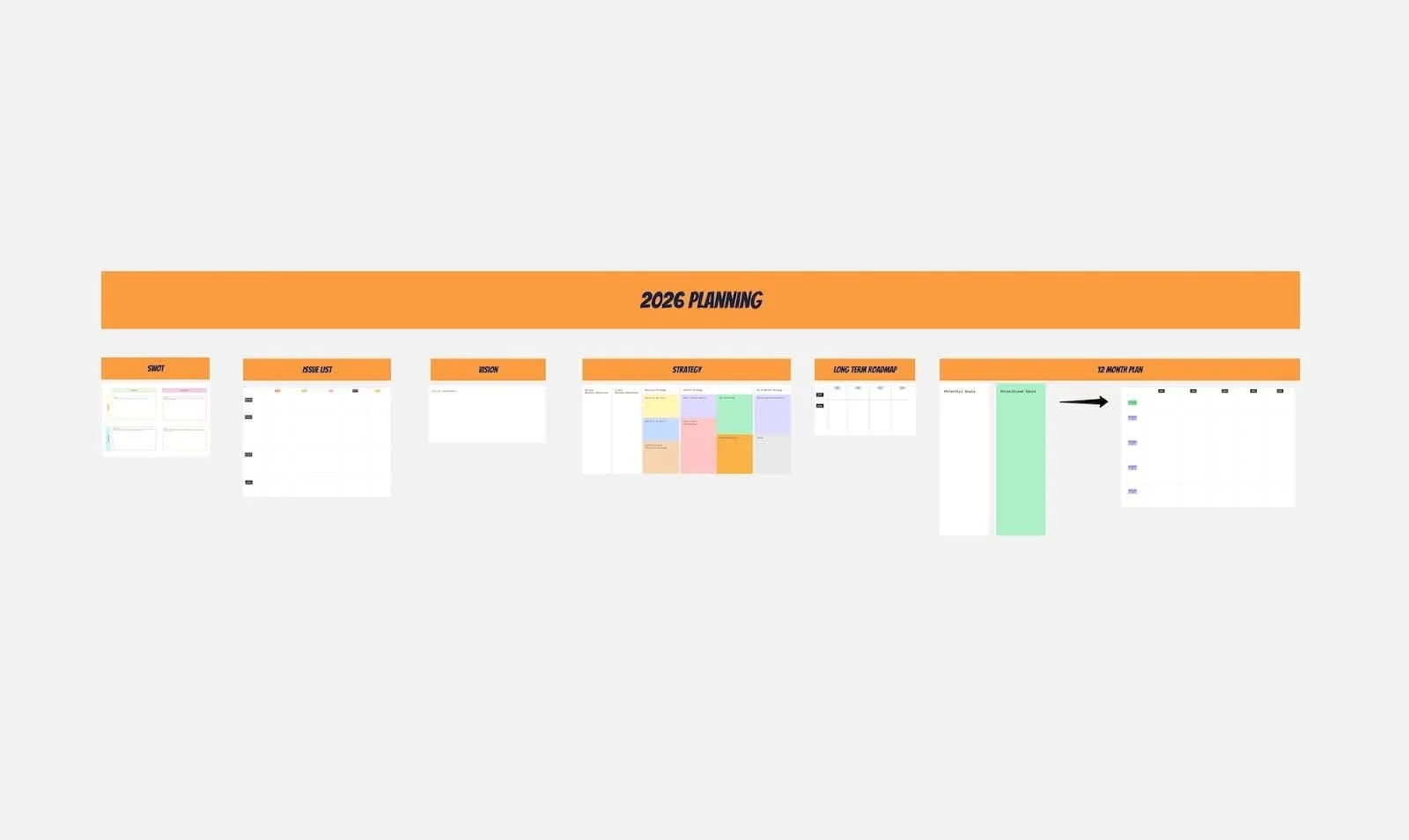
Link to Miro board at the end
It' snot my invention. It came from a founder and product leader I used to work with.
I really like it (and still use it today) because unlike other planning workshops it's:
Outcome-oriented: You'll notice in the video (below) that I get 50% through before I start talking about milestones and what your plan might be.
Flexible: By starting with outcomes (and more importantly strategy) and working down to milestones, it won't be your typical annual plan that's useless in a week.
Lightweight: There are no heavy estimation exercises, week-by-week planning, or large dependency maps. It's stripped back to the bare minimum you need to effectively plan. Of course, if there are additional things you feel would be helpful, you can add them.
And because I'm a Product Coach, you're not just going to get the template. That would be the easy thing to do.
Instead, I'm going to spend the next 5 minutes breaking the template down into the key principles behind it.
So you can understand the why behind its design, and better adapt it to your needs.
Because a template is only as good as your ability to adapt it to your context.
Note: You can use this for quarterly planning as well.
How it’s structured
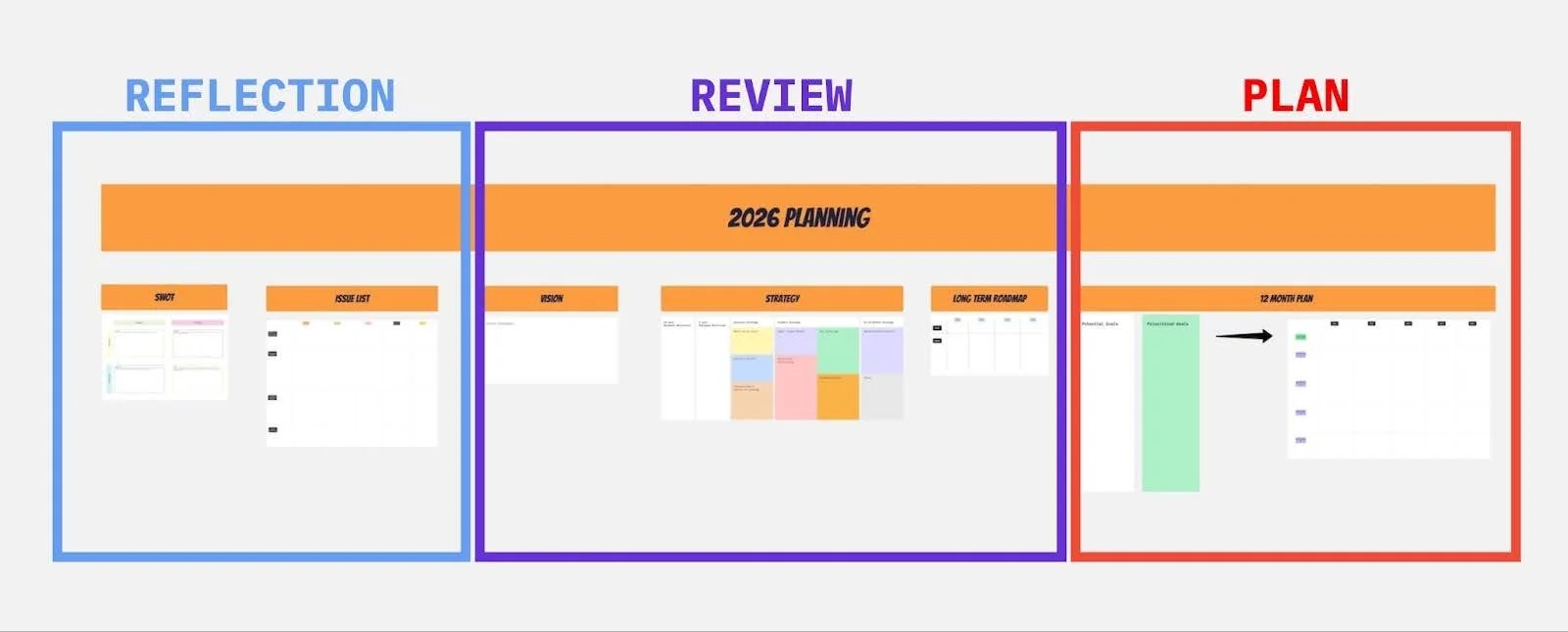
The planning workshop contains 6 sections organized into 3 themes:
Reflection
Review
Planning
1. Reflection
The first 2 sections of the workshop are intended to facilitate an honest reflection on how the business/product has performed over the past 12 months (or quarter).
This is key.
Because you can't take on new work until you first address your current challenges.
I see this too often. Teams spend the day planning all these amazing new ideas but return to fighting fires the next day - it's like dreaming about a new yacht when you're in the middle of the ocean on a leaking one.
To facilitate this, the workshop starts with a SWOT analysis, but you can do any form of reflection here.
I've used:
Start, Stop, Continue
What worked well vs. what didn't
And all kinds of other formats
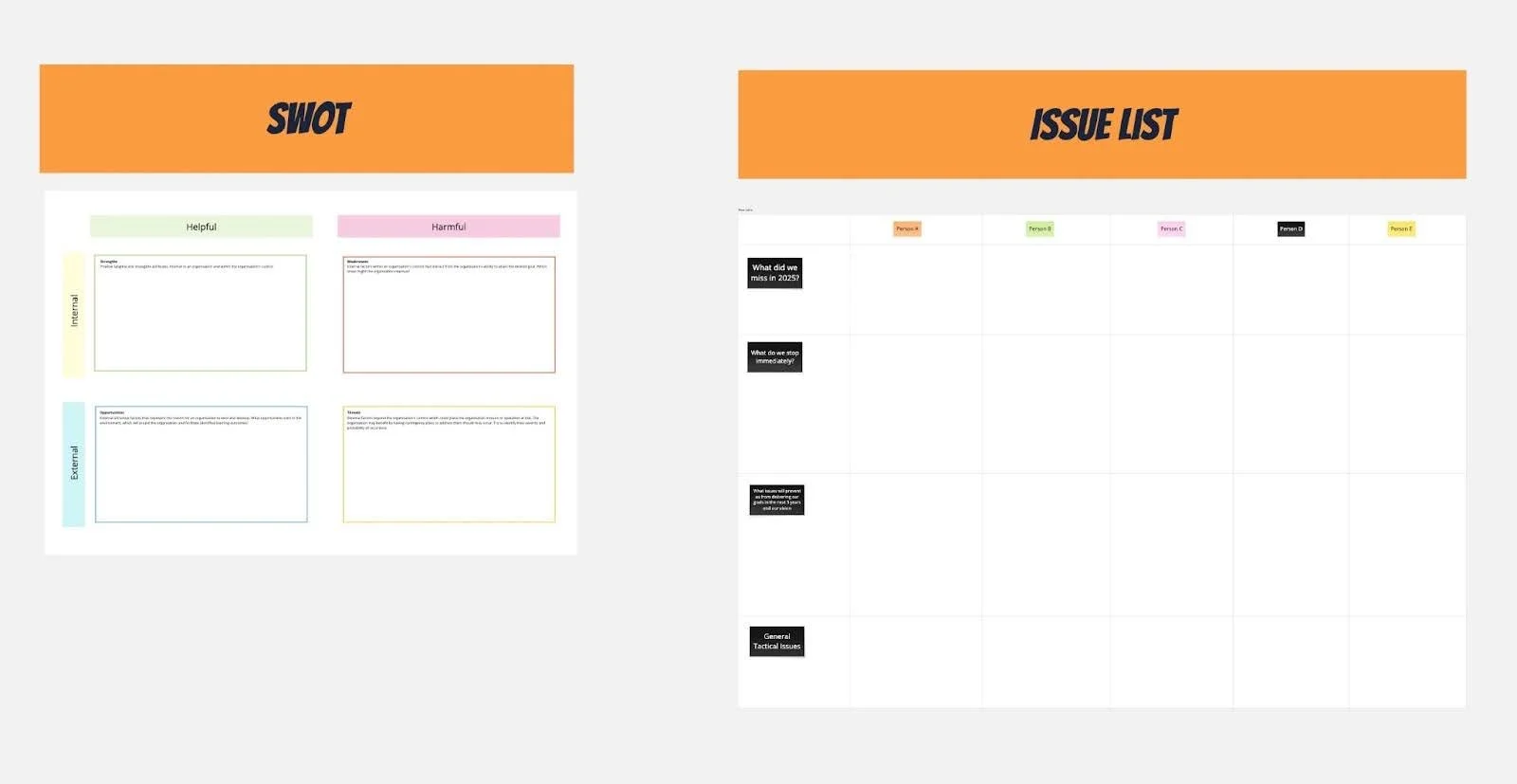
The second activity in the board is to create an 'issues list'.
This is typically facilitated as 'silent brainstorming' where each team member gets a row and writes down all the current issues and challenges that need addressing.
Again, you can do a different activity, even choose to do only one rather than both, but the goal with this step is to understand what's working versus not so you can adapt.
2. Review
After looking back, we now need to look forwards.,
A plan is only useful if you know where you’re going.
The next 3 sections in the board are all focused on reviewing your long-term vision, product strategy and roadmap.
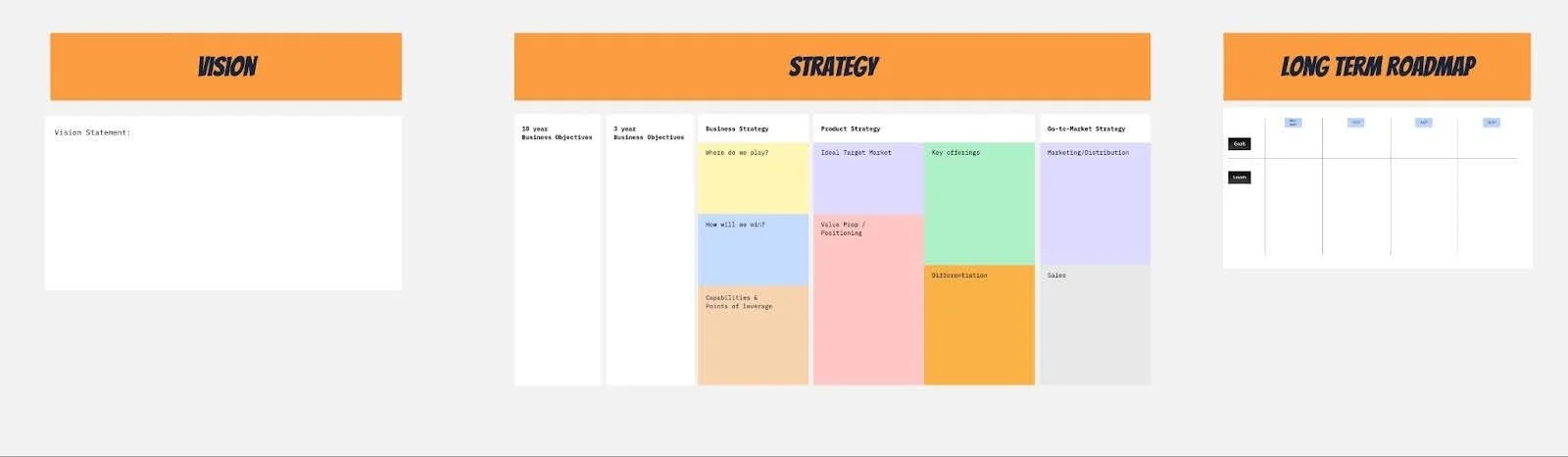
Note: these sections should be pre-filled. You shouldn’t be creating your vision or strategy in the workshop. It’s not a strategy workshop, it’s planning.
The goal is to review them:
Is the vision still valid?
Does our roadmap need to change?
Do we need to make adjustments to our strategy based on what's working vs not?
Note: if you don't have a product strategy or roadmap, you can use the template a lightweight one but just remember it’ll only get you so far.
3. Planning
Finally, now that we've aligned to the long-term strategy and reflected on what's working versus not, we can plan.
To avoid the mistake of creating a plan that will be out of date in a week, we want to start with goals, not activities.
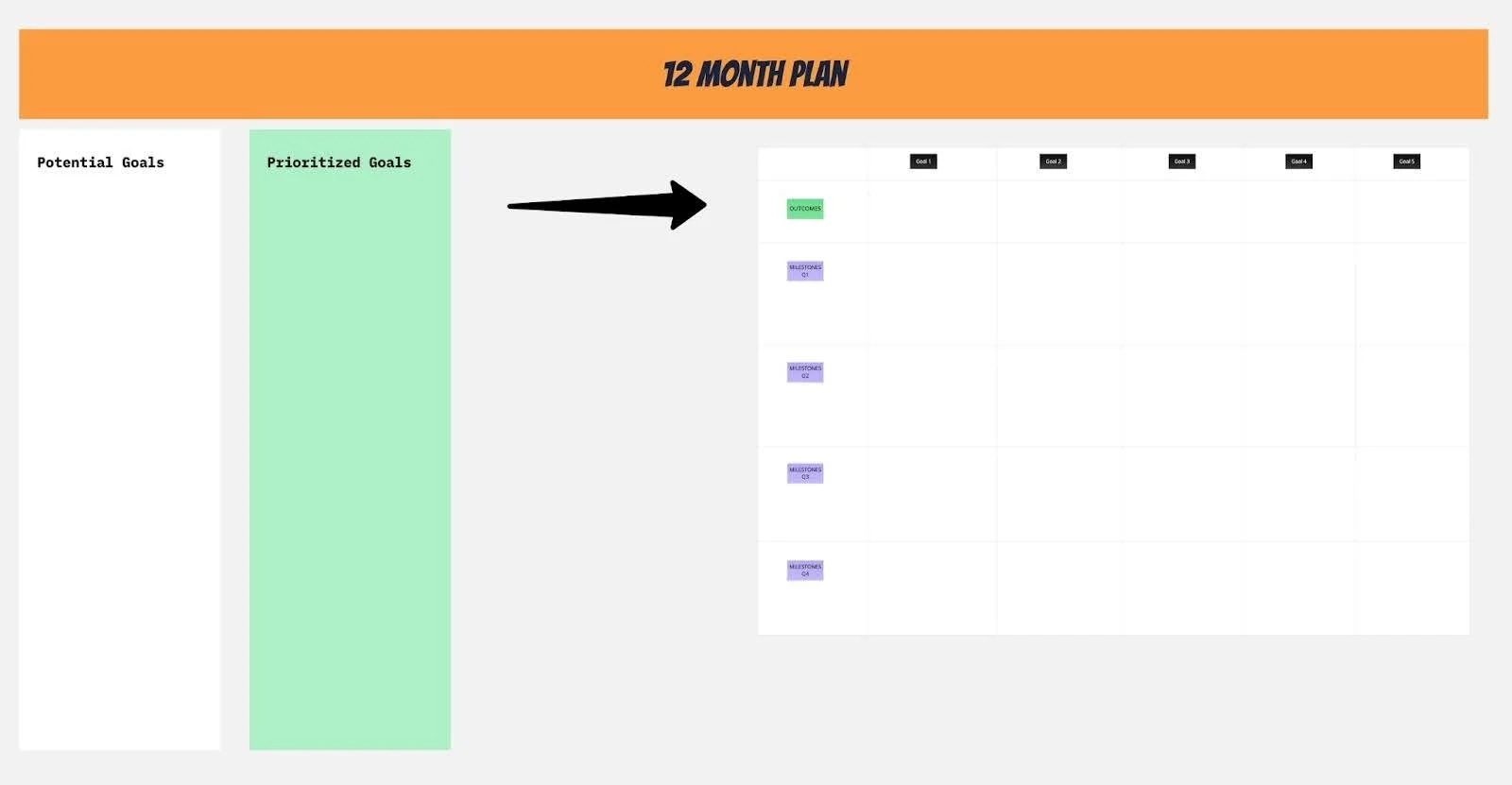
These should be based on everything you've gone through so far:
Your vision and strategy
Any OKRs if you have them
Addressing any key challenges or issues
Any constraints being caused by issues
What goals should we have for this year (or quarter)?
As usual, you're going to have more goals than you can realistically achieve, so you need to prioritize them. My tip: less is more.
Once you've focused on a handful of goals, you need to break them down.
To do this, the template will get you to break each goal down into quarterly milestones - if you're using this template for quarterly planning, I'd recommend making them monthly milestones.
At this point, you can finally get down to the activity and planning level.
There's nothing wrong with your milestones being outputs. In fact, that's exactly what they need; clear deliverables.
The key here is that they're still grounded in outcomes.
You should be able to map from vision down:
Vision → Product Strategy → Roadmap → Goals/Outcomes → Milestones
This makes all the difference between a plan that feels like a waste of time versus one that's actually helpful.
How long should I spend?
When I was first introduced to this, it was as a 1-day workshop.
I've since used it and similar variations, and 1 day has worked well.
Here’s the caveat however…
1 day (or less) works well when:
The team is not too large (<8 people)
There's a decent amount of cohesion
A vision, strategy, and roadmap exist
If one of these things isn't true for you, I'd recommend extending it to 2 days. (I know it sucks, but trust me—you can spend a day arguing over the strategy if it's not clear.)
Bonus: Pre-mortems
There’s a big difference between building a plan and actually planning.
You can have the nicest-looking plan in the world, but if it's not realistic, doesn't incorporate potential risks, issues, or the unexpected coming up, then it's just wishful thinking.
"In preparing for battle I have always found that plans are useless, but planning is indispensable."
- Dwight D. Eisenhower
This was a big takeaway I took from my time at the Royal Military College.
Planning includes: What will you do if you run out of water? If that mountain is too steep to climb? What about if you cannot travel through our preferred route?
This is why I’m a big advocate for pre-mortems.
Because it's not about logging risks and assumptions into some register that no one ever looks at. It's planning what you're going to do about them.
How are you going to test that the assumption is true or false? And if it's false, what would we do next?
That's planning!
Parting thought
I know what some of you are thinking. Wouldn’t it be better to plan ‘just in time’?
In other words, why worry if the assumption is true or not now? Can’t we just deal with it when the time comes?
And you totally can.
But don't underestimate the power of momentum and alignment.
Having to pause, get the right people in a room to address an issue, and then go around and realign everyone on the new path isn't always easy.
That loss in momentum can cost you, and you can easily lose a couple of days to this.
Compared to already aligning on alternate paths and empowering people to make the switch without skipping a beat.
Here’s my reflection for you:
Are you spending enough time actually planning - discussing unknowns, what might go wrong, contingencies, etc?
Maybe I'm more biased this way, but I prefer to 'plan for the worst and hope for the best' rather than 'plan for the best' and pray that nothing goes wrong.
Because we know something will.
🔗 Link to miro board template.
Hope it helps you as much as it’s helped the people in the Product Mentorship.
Any questions or comments, reach out.
/Ant
P.s. friendly reminder:
14 spots remaining for next cohort Product Strategy in Practice
Don’t forget to register for next week’s live stream: ‘You Don't Have a Prioritization Problem, You Have a Strategy Problem’
Top Posts
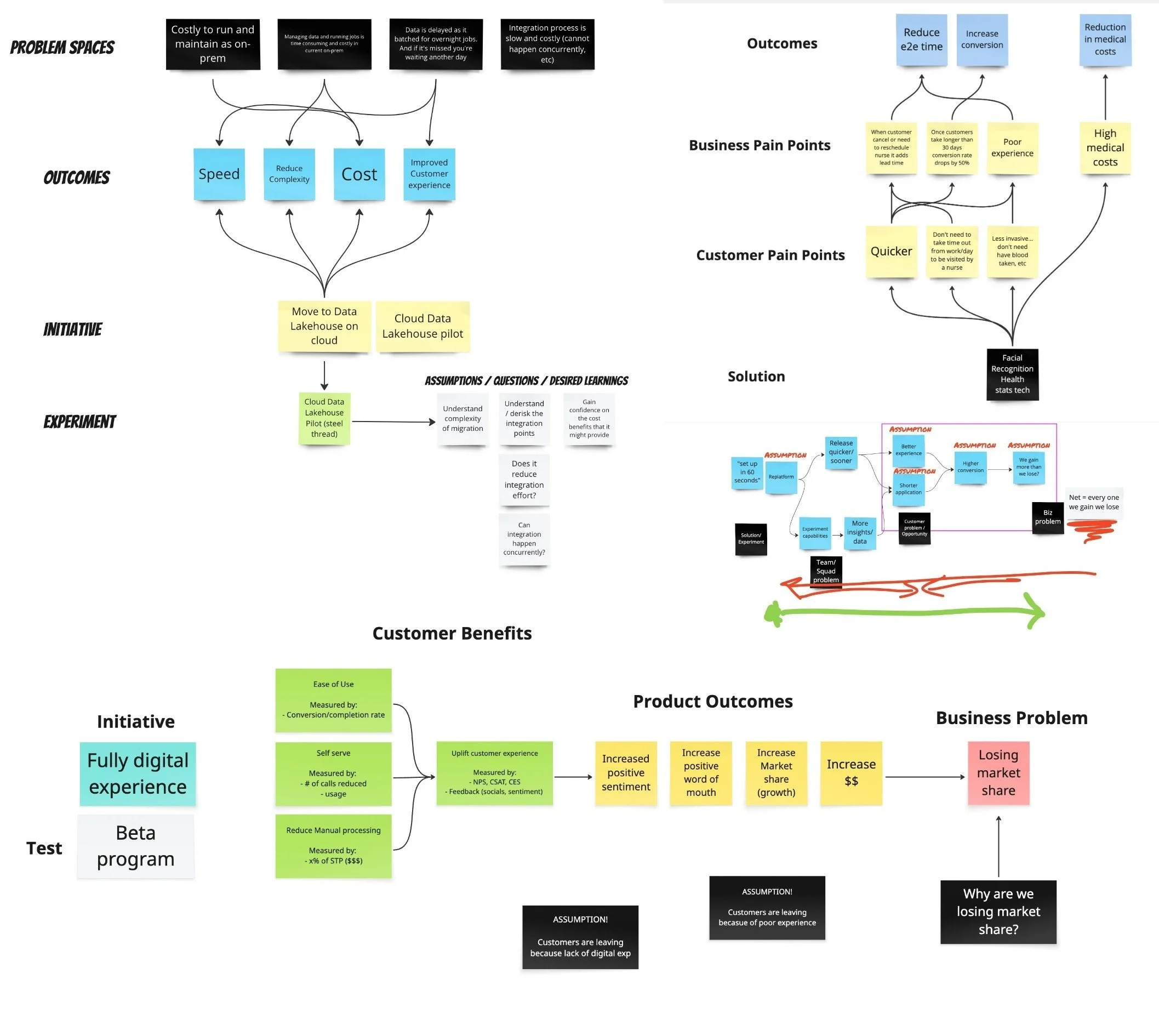






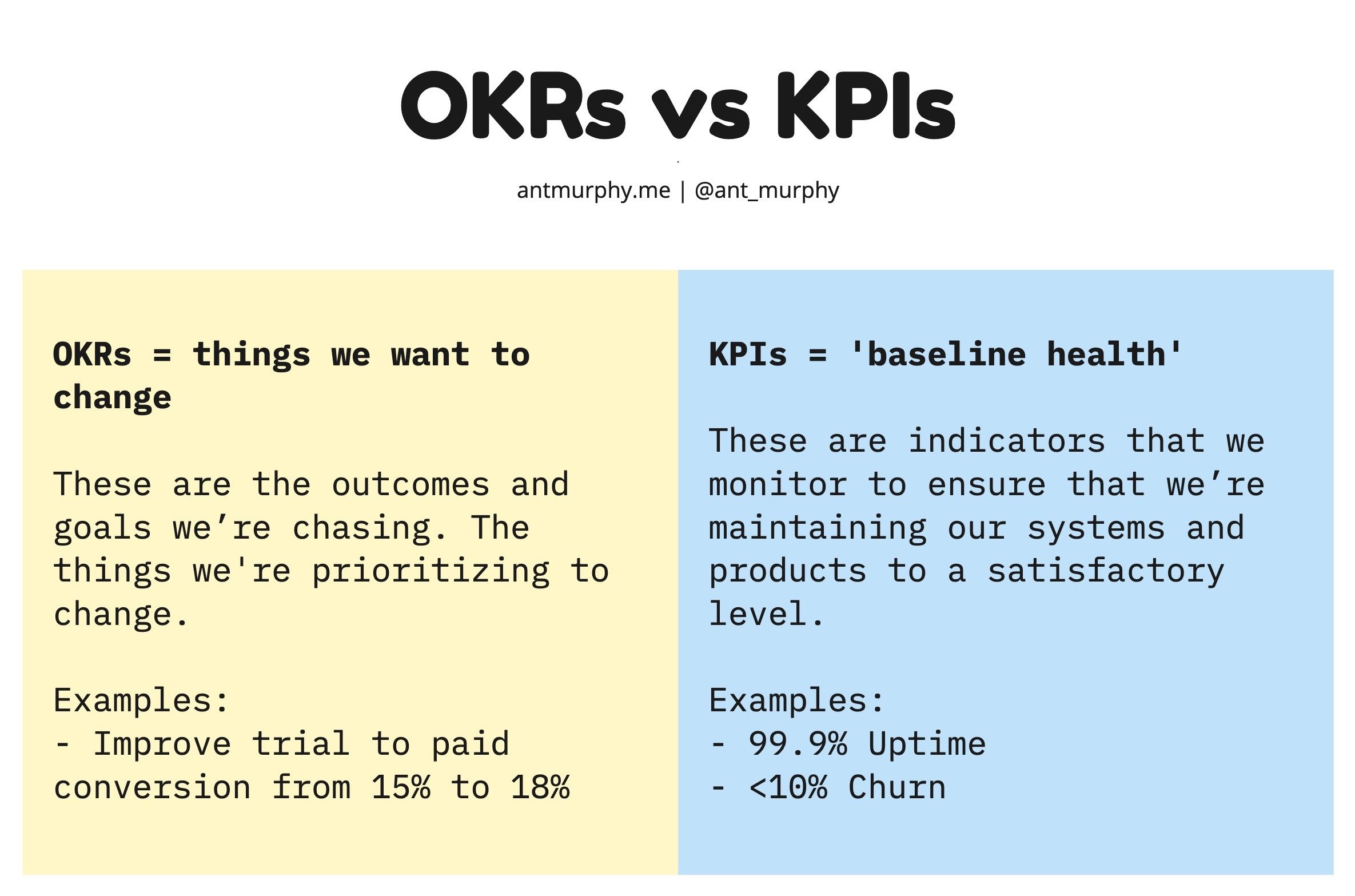
Your OKRs don’t live in a vacuum.
Yet this is exactly how I see many organizations treat their OKRs.
They jump on the bandwagon and create OKRs void of any context.
Here’s what I see all the time…