
Improve Your Influence (not clickbait, this truly did for me)
Why your best arguments keep failing to convince stakeholders and what actually works - and the science behind it.
Hey Ant here, I started this newsletter to share the lessons I wish someone had told me 10+ years ago early in my product career. Expect to find practical lessons on building products, business and leadership. If you prefer podcasts or videos, check out my YouTube.
Recent posts you might have missed:
- You Don’t Need Another Prioritization Framework: Just These 4 Components
- Free Annual Planning Workshop Template
- How product companies operate without BAs, Scrum Masters, Release Managers, etc
Ever have a hard time trying to influence people?
Or perhaps you’ve wondered why someone always seems to push back no matter how solid your reasoning is?
There's a lot to unpack behind why. But one thing that genuinely changed my whole approach to influencing — and collaboration more broadly — was understanding cognitive dissonance.
What is Cognitive Dissonance?
Cognitive dissonance is essentially brain stress.
It happens when your perception of the world doesn't match with something you just heard or saw.
This concept was first described by Leon Festinger in 1957 where he studied a doomsday cult prophecy fail and instead of abandoning the belief, the most committed members did the opposite. They doubled down.
They couldn’t reconcile the idea that they’ve dedicated their whole life to something that turned out to be false. That was too much for them to handle. Too much stress.
As a result, they rejected the information.
They continued to believe despite irrefutable evidence. Sound familiar?
And I’m sure you’ve seen this happen before. No matter how logical or bulletproof your data is the other person just seems to be digging their heels in deeper.
That’s cognitive dissonance.
What’s Happening Behind the Scenes
Depending on how important the belief or worldview is to you, will depend on how much cognitive dissonance you experience.
Maybe you don't care about the topic — then all good, not a problem.
But if it's core to your identity, your expertise, your sense of competence. Then you’re going to have a lot of dissonance.
The hard part is our bodies can’t distinguish between different stressors. All stress is treated the same.
The cognitive dissonance you experience to your brain is no different than being chased by a lion.
That makes us experience a lot of stress.
Which makes us emotional.
And when we’re emotional, no amount of perfectly structured arguments are going to work.
As Simon Sinek put it, “You can't fight emotion with logic. You have to fight emotion with emotion.”
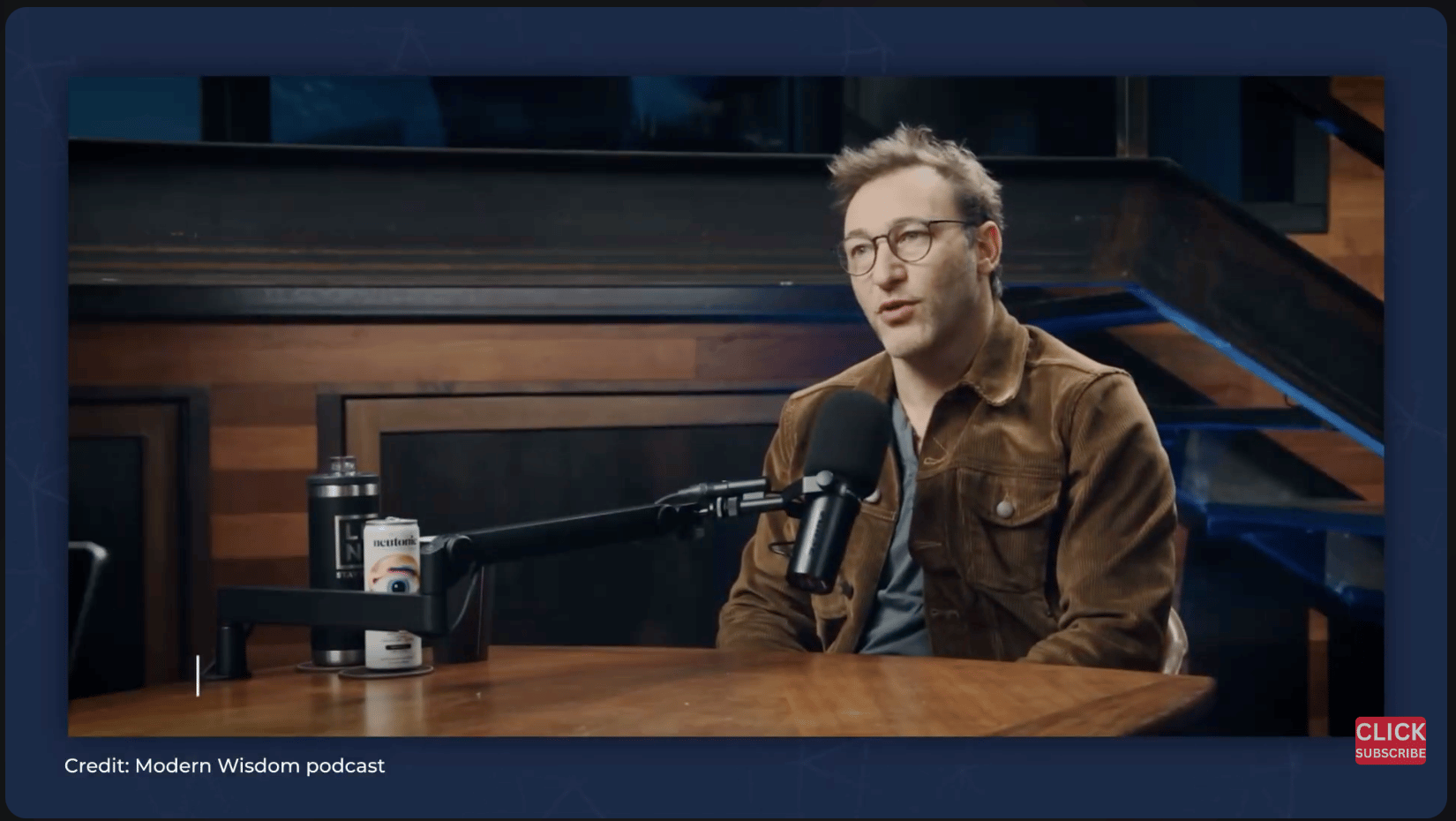
Clip from Modern Wisdom podcast
What To Do Instead
If you understand cognitive dissonance, you begin to recognise it and you can learn to avoid triggering it (as much as possible).
The best way I've found to do this is to reframe everything as questions.
Rather than saying "that's not correct". Ask, "Tell me more about how you got to this conclusion."
"You missed X" becomes "How have you considered X?"
"There's no user problem" becomes "What user problem do you see this solving?"
It might sound silly but there’s hard science behind it.
Researchers have studied what they call the Question-Behaviour Effect. Which shows that simply asking someone a question about a behaviour changes their subsequent behaviour more than telling them to.
Not telling. Simply asking.
Daniel Kahneman's, author of Thinking Fast and Slow who pioneered the discovery that our minds have two systems for thinking, System 1 and System 2. When you make a declarative statement that challenges someone, it triggers System 1, the fast, automatic, defensive response. But when you ask a question, you force System 2 engagement. The person has to actually think rather than react.
Questions are a bit of a backdoor past our brain's normal defence system.
This is the exact technique I also use when stakeholders bring me solutions not problems.
And this is where it gets powerful.
Chris Voss, former FBI lead hostage negotiator and author of the brilliant book Never Split the Difference uses what he calls calibrated questions.
These are open-ended "how" and "what" questions that steer conversations without the other person feeling steered.
When you tell someone they're wrong, their brain treats it as a threat. But when you ask a genuine question that leads them to spot a gap in their own logic they feel like they discovered it.
This is the same idea as a common coaching technique known as socratic questioning.
The reason why this works is because it’s their idea, you just helped lead them to it. But since it’s theirs, there’s zero cognitive dissonance.
This is why I always try to reframe things as questions. It’s one of the single best influencing hacks.
Slow Down to Speed Up
Now, I know some of you might be thinking, "I don't have time to play 20 questions in every meeting!"
And you’re right. This takes time.
There are also going to be times where you will have to be direct.
But I’ll frame it this way.
You know what takes even longer? Going in circles because of cognitive dissonance, having to pivot or redo work because we allowed our emotions, and System 1 thinking to take over.
Or worse spending three months trying to get a project off the ground because a stakeholder is unintentionally undermining it because of cognitive dissonance.
As Rory Sutherland puts it: "Do you want to win arguments or solve problems?"
A lot of people are trying to win arguments.
The cost is eroded psychological safety, trust, delayed projects and poor decisions,
Try Reframing as Questions For a Week
My challenge to you is to build this muscle.
The next time your in a meeting or having a conversation with a stakeholder, try to reframe any counter argument, challenge or anything that might trigger dissonance as a question - like;
"Help me understand the logic behind..."
"How would we handle the scenario where [X] happens?"
What would need to be true for this to work?"
"Tell me more about how you got to this conclusion."
"What problem are you trying to solve?"
I still come back to that Rory Sutherland quote, "Do you want to win arguments or solve problems?". Which means don’t try to be the smartest person in the room. Instead be the person who helps the room find the smartest answer.
If you want to see me dive deeper into these examples and share a few more stories on how I've applied this, check out the full video here.
Hope that was helpful.
If this resonated, forward it to someone who could use it — we all know someone who perhaps needs to lead with questions and not “I disagree…”
And as always, any questions hit reply, it comes straight to me.
Thanks for the support!
/Ant
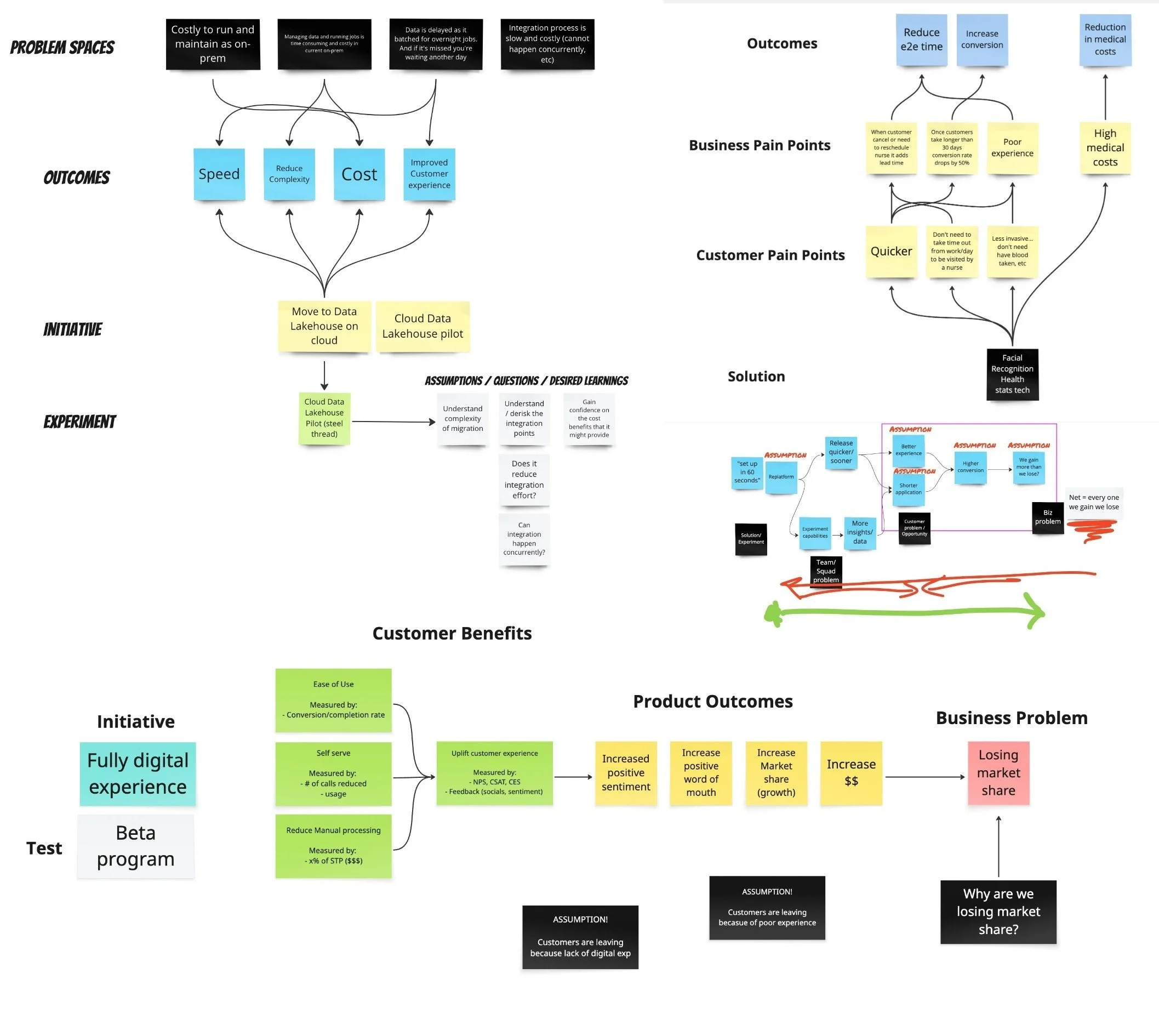








Your OKRs don’t live in a vacuum.
Yet this is exactly how I see many organizations treat their OKRs.
They jump on the bandwagon and create OKRs void of any context.
Here’s what I see all the time…